Six Grids, Six Rulebooks: FERC Orders Every Regional Operator to Rewrite Large-Load Interconnection
By Keith Reynolds | Publisher & Editor, ChargedUp!
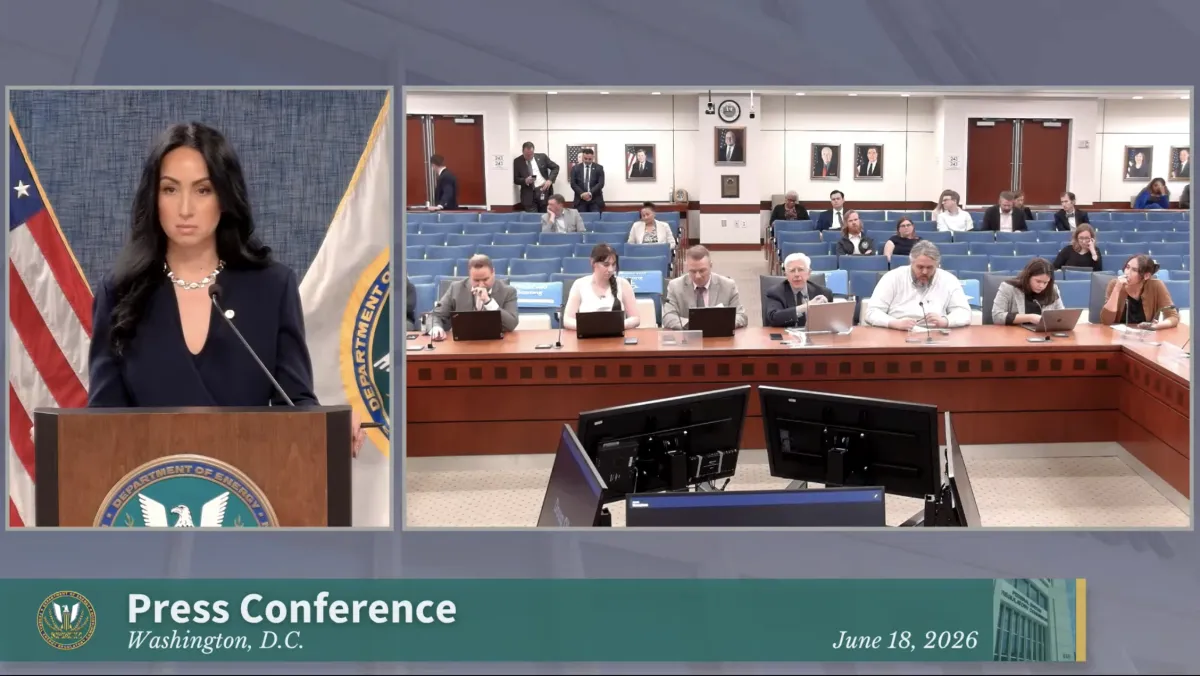
The Federal Energy Regulatory Commission (FERC) issued show-cause orders under Section 206 of the Federal Power Act to all six regional grid operators under its jurisdiction, directing each to justify or reform the rules that govern how data centers, manufacturing facilities, and other large energy users connect to the grid. The orders went to PJM Interconnection, the Midcontinent Independent System Operator, the Southwest Power Pool, the California Independent System Operator, the New York Independent System Operator, and ISO New England. Commission staff reviewed more than 3,500 pages of public comments before acting. FERC Chairman Laura Swett called the move a transformation in how large energy users access the grid, one built to protect existing deals while unlocking economic expansion.
The consequential design choice sits beneath the headline. FERC declined to impose a single national standard. Each operator must develop rules fitted to its own market design, stakeholder composition, and geography. Cooley infrastructure co-chair Mona Dajani summarized the outcome for Utility Dive: the era of one national standard for data center interconnection is over before it began. For anyone siting a large load, the practical meaning is that speed to power now runs through six different rulebooks, and the differences among them will shape which regions win the next decade of electrified development.
What the Orders Require
The orders set deadlines for each market to define processes for handling gigawatt-scale load requests, evaluating co-located generation, assigning upgrade costs, and ensuring adequate generation exists when projects come online. Within 30 days, each grid operator and its transmission owners must file a detailed report describing how they intend to ensure generation adequacy for existing and new large loads. The orders build on a December 2025 directive requiring PJM to adopt transparent rules for co-located loads and on SPP's High Impact Large Load study framework.
FERC also pushed a technical lever with direct cost implications. Grid operators must consider alternative transmission technologies, including advanced power flow control devices, synchronous condensers, advanced conductors, and dynamic line ratings, when studying transmission requests for large loads. If an operator concludes traditional network upgrades are necessary, it must show why the alternatives would not deliver a faster timeline or a lower bill. Commissioner David LaCerte framed the stakes plainly, saying the technologies can unlock every megawatt of existing capacity on the current system. He also made the enforcement posture explicit: if the operators fail to address the concerns, FERC will dictate the solutions itself.
Why Regional Divergence Matters to Site Selection
Interconnection timelines already vary enough to decide project outcomes. Grid connection waits in the largest data center markets average at least four years, and Northern Virginia connections for loads above 50 megawatts run near seven years, according to JLL's 2026 Global Data Center Outlook. Once six operators file six different reform packages, that variance will widen before it narrows. A market that adopts fast-track treatment for flexible loads, credits co-located generation, and deploys advanced transmission technologies will compress time to power. A market that defends serial study queues will watch capital migrate. Texas, outside FERC's ISO jurisdiction and already projected by JLL to capture 30 percent of the U.S. data center market by 2028, sets the competitive benchmark the six regulated markets now chase.
The cost allocation questions embedded in the orders reach beyond hyperscale tenants. How each operator assigns upgrade costs for large loads determines what flows into the transmission component of every retail bill in the territory. Perkins Coie data center co-chair Jane Rueger noted that FERC is signaling priority for projects that are real, financeable, operationally flexible, and able to integrate without imposing unjustified costs on other customers. Flexibility, in other words, is becoming a currency that buys queue position. That is the same currency a campus with storage, onsite generation, and managed EV charging already holds.
The Distributed Power Read
The orders accelerate the structural shift toward distributed energy by making the traditional path more expensive and more scrutinized at the same time. When co-located generation earns defined treatment and flexible loads earn faster studies, the rational site plan changes: bring generation, storage, and load management to the interconnection application rather than asking the grid to solve the whole problem. Developers who design electrical rooms for modular power electronics, reserve yard space for storage, and structure loads to curtail on signal will find the six new rulebooks converging on one theme, whatever their regional differences. The grid intends to reward buildings that behave like cells that balance themselves first and draw on the network second.
Watch the Filings, Not the Headlines
The 30-day informational reports arrive this month, and the tariff filings that follow will read like six regional industrial strategies. Owners with land or assets in PJM and MISO territory should track the co-location provisions most closely, since those two markets hold the deepest data center pipelines. Anyone underwriting a project that assumed a uniform federal interconnection standard should reprice that assumption now.
