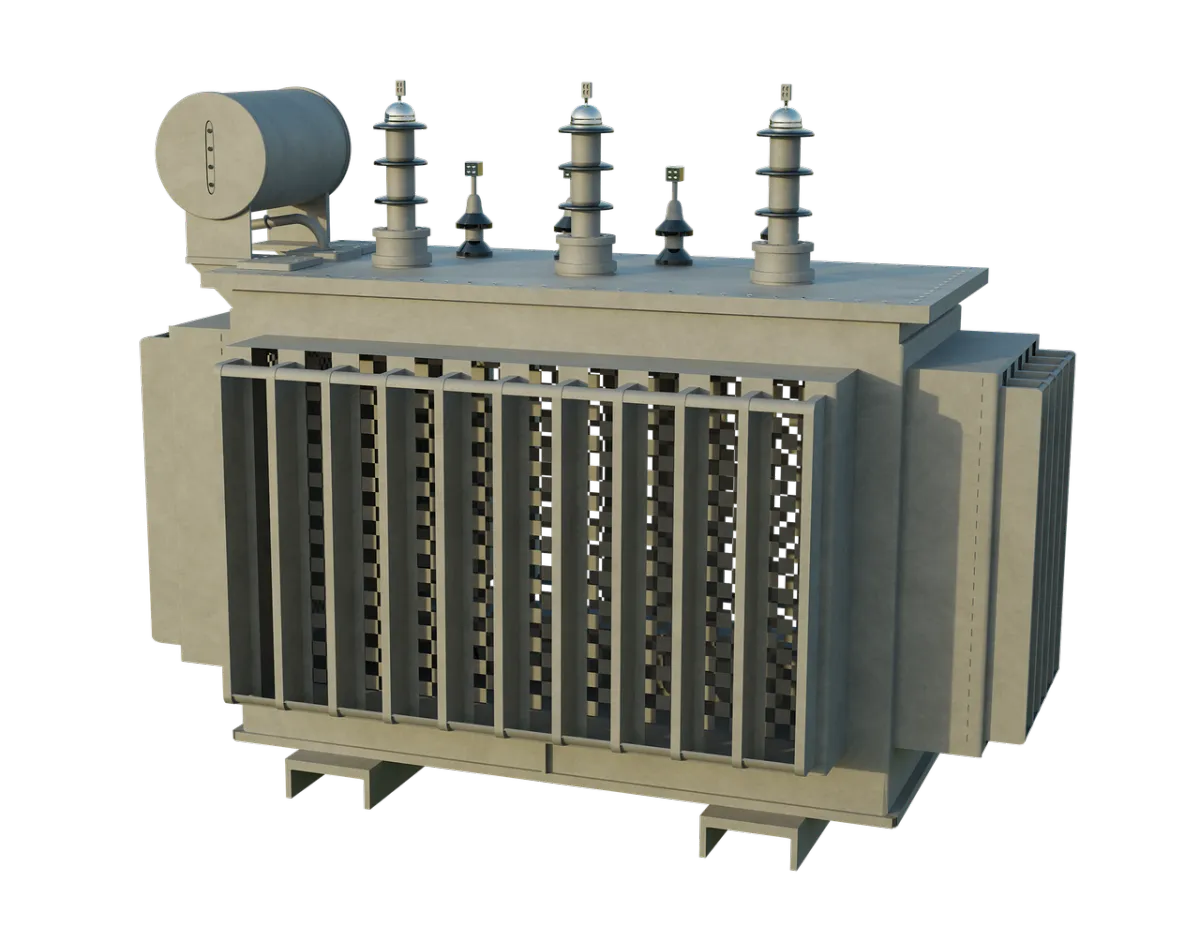
Four Years to a Transformer: The Bottleneck Now Setting the Pace of Commercial Real Estate
By Keith Reynolds | Publisher & Editor, ChargedUp!
A transformer procurement bottleneck now governs commercial real estate timelines. Large power units can take 128–144 weeks, with some specialty orders reaching four years. Prices have risen 77–95% since 2019 as grain‑oriented electrical steel and copper costs surged. Until new North American capacity lands by ~2028, underwriting, site selection, and procurement must center on speed‑to‑power as well as on permits and capital.
What is the transformer bottleneck in commercial real estate?
It’s the reality that buildings can be permitted, financed, designed, and built faster than utilities can deliver the transformers required to energize them.
Scope: Affects generator step‑up (GSU) transformers, substation power transformers, and many distribution‑class units.
Consequence: Speed‑to‑power has become a primary filter for site selection and a core input to underwriting and lease structuring.
The Power Bottleneck: Fitting a Metropolis Inside a Large Server Room
US Grid Interconnection Backlog Scale
Backlog volume: 2,300 gigawatts currently waiting for grid connection.
City equivalent: Equal to 2,300 individual cities of one million people (e.g., Jacksonville, Florida).
National capacity: Represents roughly double the entire existing power generation capacity of the United States.
AI Data Center Power Density Growth
Legacy power demand: Standard server racks required 10 kilowatts of power five years ago.
Modern power demand: Next-generation NVIDIA Rubin Ultra platforms demand nearly 600 kilowatts per rack.
Density challenge: Compressing the energy consumption of a full-scale metropolis into a single building footprint.
AI Workload Grid Volatility and Infrastructure Damage
Spike frequency: AI computing workloads experience violent power spikes up to four times per second.
City vs. AI load: Metropolises draw electricity smoothly, whereas AI centers create rapid, erratic surges, as DG Matrix CEO Haroon Inam explains in the following video clip.
Generator damage: Power surges create severe harmonic resonances capable of shearing shafts off standard generators.
Grid compatibility: Legacy electrical grid infrastructure cannot handle the unique physics of AI energy demand.
How long are transformer lead times now, and what’s driving them?
Standard power transformers average ~128 weeks; GSUs average ~144 weeks, with specialty orders extending to four years. Demand from data centers and renewables surged, while key materials and manufacturing capacity remain tight.
Lead times: ~128 weeks for standard power units; ~144 weeks for GSUs; some specialty orders up to four years (Wood Mackenzie Q2 2025; NERC 2024 trend).
Prices: Power transformers +77% since 2019; distribution units +78–95% over the same period. Some categories reached 2.6x pre‑pandemic in real terms (IEA 2025).
Materials: Grain‑oriented electrical steel roughly doubled since 2020; copper up >50%—both essential inputs.
Demand drivers: Data center growth, renewable interconnections (GSUs up ~274% since 2019), grid hardening/replacement, and broader electrification.
Factory utilization: Large power transformer facilities averaged ~70% in 2025; projected ~80% by 2030—leaving little room for demand spikes (IEA).
What the bottleneck does to underwriting, leasing, and deal timing
The bottleneck pulls transformer sourcing forward into the opening moves of a deal and rewrites assumptions around rent commencement, debt draw schedules, and contingency planning.
Underwriting guardrails that now matter
Site selection = power selection: Treat transformer and substation availability as a gating criterion. A site needing a new substation or major upgrade carries embedded 2–4 year risk.
Capex timing: Long‑lead deposits and framework agreements may precede final investment decision. Treat transformer reservations like construction debt: secure the slot, then build the capital stack around it.
Debt modeling: Extend interest carry and adjust lease‑up curves to match energization windows. Sensitize IRR and DSCR to multi‑year equipment uncertainty.
Lease language: Revisit rent commencement tied to utility readiness; add provisions for force majeure tied to utility equipment lead times; define tenant step‑in rights for alternative power solutions.
EPC sequencing: Issue transformer specs early, freeze interconnection parameters, and confirm pad/switchgear footprints before vertical construction milestones.
Insurance and LDs:Align delay‑in‑start‑up and liquidated damages with realistic energization dates; share utility dependency transparently with lenders and tenants.
Utility coordination: Map queue position and internal utility prioritization. In several markets, being on the right list matters more than being shovel‑ready.
Fallback power plan: Define an N+1 path using onsite resources (gensets, storage, microgrid) that can operate until full utility service arrives—and model its opex and emissions profile.
Are manufacturers closing the gap?
New North American capacity is coming—but not fast enough to solve 2026–2028 timelines. Expect extended lead times and elevated prices to persist near‑term.
Investments: Nearly $2B in announced expansions from Hitachi Energy, Siemens Energy, and others by ~2028; distribution‑class expansions at ERMCO (TN/WI), Central Moloney (FL), MGM Transformer (TX), HD Hyundai Electric (AL).
Remaining gap: NREL projects U.S. distribution transformer capacity must grow ~160–260% by 2050 vs. 2021. About 2.1% of the fleet retires each year; >70% of the U.S. grid is 25+ years old, so replacement alone strains capacity.
Implication: Projects breaking ground before new factories scale still face today’s queue
Who gets priority, and why does it matter for siting?
Large, consolidated buyers often secure factory slots first. The recently announced NextEra-Dominion merger concentrates the biggest U.S. transformer book, which can tilt allocations toward their pipeline and service territories. Here are some additional considerations:
Large IOUs vs. others: Investor‑owned utilities with multi‑year procurement programs can outrank small utilities, munis, and merchant developers in slot negotiations.
Regional effects: Florida, Virginia, North Carolina, South Carolina could see priority deliveries where consolidated demand is strongest—benefiting some interconnections and crowding out others.
Market operators: In PJM and ERCOT territories, utility prioritization increasingly dictates which large loads move first. Queue status is necessary, but not sufficient without allocation clarity.
Practical options to shorten speed‑to‑power
Move procurement to Day 0, diversify specifications, and design credible behind‑the‑meter pathways that can carry load until full utility service arrives.
Early procurement and framework agreements: Secure capacity blocks and ROM pricing now; add spec flexibility (kVA range, impedance, cooling class) to widen acceptable units.
Pre‑approved alternates: Qualify multiple OEMs and secondary specs; align protection settings and switchgear compatibility early.
Refurbished or mobile units (with caveats): Can bridge modest loads or interim phases; verify testing, warranty, and standards compliance; expect limited availability for high‑MVA needs.
Onsite generation + storage: Pair reciprocating engines or turbines with battery storage to support critical loads; treat the grid as backup until the permanent transformer lands.
Phased energization: Stage building commissioning by load blocks; energize core operations sooner with a smaller transformer or partial feed.
Dual‑feed and topology planning: Where feasible, engineer alternate circuits or temporary substations; confirm utility willingness and cost recovery in writing.
Demand flexibility: Design for curtailment and load shifting to reduce nameplate requirement for interim operations and interconnection studies.
Back‑casting the schedule: Start with the earliest credible energization date, then drive permitting, financing, and vertical construction around that anchor.
What’s the cost outlook, and how should owners respond?
Expect elevated equipment costs to flow through to tariffs. Tenants will feel it in bills; owners who design for a higher energy‑cost future protect NOI.
Pass‑through reality: Doubling in transformer prices and longer timelines roll into rate cases and retail tariffs over time.
Owner strategies: Bake in high‑efficiency envelopes, electrified HVAC with flexible control, PV and storage readiness, and negotiated curtailment rights. These steps hedge both capex delays and opex drift.
Sources
Bloomberg, "Galvanize Expands Its Strategy of Greening Commercial Real Estate," May 4, 2026. https://www.bloomberg.com/news/articles/2026-05-04/galvanize-expands-cre-portfolio-as-iran-war-aids-energy-strategy
IndustrialSage, "Power Transformer Lead Times Hit 128 Weeks in 2026," citing Wood Mackenzie Q2 2025 survey. https://www.industrialsage.com/power-transformer-lead-times-us-grid-shortage/ Also see POWER magazine, "Transformers in 2026: Shortage, Scramble, or Self-Inflicted Crisis?" January 2, 2026.
International Energy Agency, "Building the Future Transmission Grid," 2025, cited in CWIEME Berlin, "24+ Month Lead Times: New Normal for Transformer Suppliers," March 17, 2026. https://berlin.cwiemeevents.com/articles/new-normal-component-suppliers
JLL Research, "2026 Market Outlook for Global Data Centers." https://www.jll.com/en-us/insights/market-outlook/data-center-outlook
National Renewable Energy Laboratory projection cited in CWIEME Berlin, March 17, 2026, op. cit. Also see Fast Company, "Supply-chain delays for transformers, cables, and breakers push power grid to the brink," November 18, 2025. https://www.fastcompany.com/91442349/supply-chain-delays-transformers-push-power-grid
NextEra Energy, Inc. and Dominion Energy, Inc., joint press release, May 18, 2026, SEC Form 8-K Exhibit 99.1. https://www.sec.gov/Archives/edgar/data/0000715957/000119312526227930/d158175dex991.htm
Paulina Torres, JLL Global Research Director of Sustainability Research, cited in Commercial Property Executive, "Earth Day 2026: What's Driving Sustainable CRE Decisions Now," April 2026.
pv magazine USA, "U.S. transformer market faces severe supply constraints as lead times extend to four years," May 11, 2026. https://pv-magazine-usa.com/2026/05/11/u-s-transformer-market-faces-severe-supply-constraints-as-lead-times-extend-to-four-years/
Transformer Magazine, "US transformer shortage deepens," May 12, 2026. https://transformer-magazine.com/news/us-transformer-shortage-deepens/
Frequently Asked Questions
What is the transformer bottleneck in commercial real estate?
It’s the multi‑year wait for utility‑scale transformers needed to energize buildings. Projects can clear permits and financing long before the power equipment arrives, making speed‑to‑power the critical path for development and leasing.
How long do power transformer orders take in 2026?
Industry surveys show ~128 weeks for standard power transformers and ~144 weeks for generator step‑up units, with some specialty orders extending to four years. Backlogs and materials constraints keep timelines elevated.
Why are transformer prices so high?
Prices are up 77–95% since 2019 due to surging demand (data centers, renewables, grid hardening), higher input costs (grain‑oriented electrical steel, copper), and factory backlogs that favor long‑term buyers over spot purchases.
Can onsite generation and storage bypass the transformer delay?
Onsite generation and storage can partially bridge the tranformer delivery gap. A microgrid with generation and batteries can support critical loads while using the grid as backup, but interconnection, emissions, and opex must be modeled carefully.
Are refurbished or mobile transformers a viable stopgap?
Sometimes. They can support interim or phased loads if they meet standards, pass tests, and carry credible warranties. Availability is limited for high‑MVA applications and should be validated early.
How should developers model the delay in underwriting?
Pull transformer procurement to Day 0, extend interest carry, tie rent commencement to energization milestones, add force‑majeure language for utility delays, and model an onsite fallback power plan with clear opex assumptions.
Next Steps
If you’re underwriting an active 2026–2028 project, re‑center the schedule on energization and treat the transformer as your first long‑lead critical path item.
Map required transformer class and spec flexibility; solicit framework terms from 2–3 OEMs.
Back‑cast from credible energization to set design, permit, and debt milestones.
Qualify an interim power plan (gensets + storage) with cost, emissions, and runtime guardrails.
Revisit lease language for rent commencement and utility‑dependent delays.
Engage your utility’s planning group now; verify prioritization and slot visibility in writing.
For ongoing coverage and practical briefs on speed‑to‑power, explore our Solar, Storage and VPPs coverage or browse All Stories.
