The Mideast Energy War, Part 18: Oil Posts Its Worst Quarter Since the Pandemic. The Cost of Capital Did Not Follow.
By Keith Reynolds | Publisher & Editor, ChargedUp!
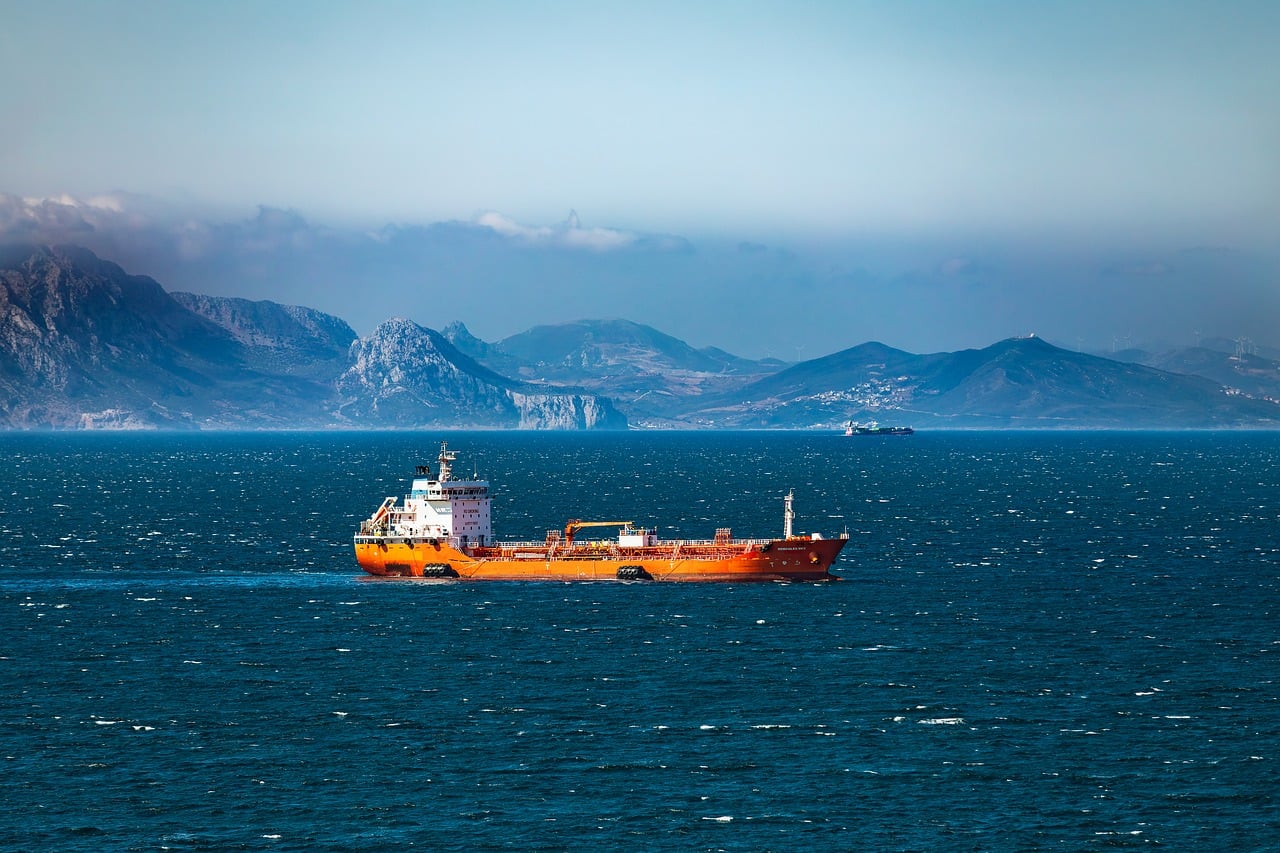
Brent crude traded near $72 a barrel Wednesday morning, and the second quarter of 2026 closed as the worst for oil since the pandemic year of 2020. Brent fell roughly 21 percent in June alone, its largest monthly decline since March 2020, and about 30 percent across the quarter. Iran has shipped more than 40 million barrels since the United States lifted its naval blockade. Tanker traffic through the Strait of Hormuz is recovering, and analysts now warn of a supply glut rather than a shortage.
The yield on the 10-year U.S. Treasury note sits at 4.38 percent.
That number has barely moved through the entire collapse in oil. When this series recorded it in Part 17, the 10-year sat at 4.48 percent as Brent hit its first pre-war low. Ten days and another leg down in crude later, the benchmark that prices commercial real estate debt has fallen roughly a tenth of a percentage point. The war premium has drained almost entirely out of oil. It has not drained out of the cost of capital, because it was never fully in it.
As we explain at the end of the article, we are moving on from the shock presented by the war in the Middle East. We will continue this series, but focus on broader market news that drive the economics and financial decision making of energy and electricity for commercial real estate and urban planning readers.
Why Treasury Yields Held While Oil Collapsed
Two forces hold long-term yields up, and neither one reverses when crude falls.
The first is the Federal Reserve. Chair Kevin Warsh, speaking this week at the European Central Bank’s annual forum in Sintra, Portugal, maintained a hawkish posture focused on persistent inflation rather than the relief in energy prices. Core inflation gauges have already moved above 3 percent, and following the June Federal Open Market Committee (FOMC) meeting, multiple committee members projected one or more rate increases before year-end. Minneapolis Fed President Neel Kashkari publicly backed a rate increase by year-end. Falling gasoline prices help the next headline inflation print. They do nothing for the core inflation the Fed targets, and the Fed sets policy for the core.
The second force is specific to Warsh. He launched a task force to examine shrinking the Fed’s holdings of Treasury notes and bonds, a move that puts additional upward pressure on long-term yields independent of the rate decision. As Trading Economics noted this week, that campaign lifted yields even as lower energy prices argued for them to fall. A central bank that runs hawkish on inflation and simultaneously considers reducing its bond holdings applies two separate upward forces to the 10-year at the exact moment oil removes the one downward force the market expected.
The shape of the curve tells the story. The spread between the 2-year and 10-year Treasury notes sits at 31 basis points, a narrow gap that signals investors do not demand much additional yield to hold debt for a decade rather than two years. A flat curve of this kind reflects a market that expects short-term rates to stay elevated and growth to slow, which is the higher-for-longer environment owners have been underwriting against since the spring.
What This Means for Commercial Property Financing
The practical consequence is that no near-term rate relief is arriving to refinance into.
Commercial mortgage coupons tied to the 10-year remain where they sat through the worst of the conflict. An owner facing a 2026 or 2027 maturity who assumed the end of the war would bring the cost of capital down with the oil price is confronting a market that has decoupled the two. The energy shock accelerated an inflation problem that predated it and persists after it, and the Fed is now projecting policy for that persistent core rather than for the falling commodity.
This closes a question that has hung over underwriting since March. Through seventeen prior installments, the standing counterargument to this series held that the cost-of-capital pressure was a temporary wartime artifact that would reverse when the conflict ended. The conflict is now ending, oil has posted its worst quarter since the pandemic, and the Fed has responded by projecting a hike. The pressure was structural. The war revealed it and sped it up. It did not create it, and its resolution does not undo it.
What Actually Reopened, and What Did Not
The de-escalation is real, and it remains fragile. The United States and Iran struck a 14-point memorandum of understanding on June 17 to pause the fighting that disrupted global oil flows. Indirect talks continued this week in Doha, Qatar, where U.S. envoys met with Qatari mediators while Iran declined direct meetings. Tanker operators have shown a willingness to resume transit, and Iranian crude is moving again in volume.
The chokepoint is not returning to its pre-war state. Under the interim agreement, Iran will not impose transit fees for 60 days, but it has left open the possibility of charges afterward, a proposal opposed by the United States, Europe, and the Gulf Arab states. Tehran maintains that it intends to oversee traffic through the strait, with or without Oman’s participation. A foreign container ship ran aground this week after straying from a route Iranian authorities had not approved, a reminder that transit is patchy and the rules are being rewritten in real time. The risk premium recedes. A friction premium takes part of its place.
For the oil price, that friction sets a floor under the downside even as the acute war premium disappears. A market pricing $72 Brent on the expectation of fully restored Gulf flows is pricing an outcome Iran has explicitly said will not occur on the old terms.
The Lesson for the Building
The cost of money and the cost of electricity have both decoupled from the cost of oil, and that is the durable takeaway for owners.
Brent at $72 does not lower a commercial electricity bill, and it does not lower a commercial mortgage coupon. Utility rate cases filed during the shock continue through state regulatory dockets on their own timelines, unrelated to the price at the pump. Commercial electricity rose 10.7 percent year-over-year in the most recent federal data, and the utilities carrying tens of billions in pending rate requests do not withdraw them because crude fell. The structural case for distributed power, on-site generation, storage, and the intelligent controls that manage them, was never contingent on the war continuing. The confirmation that financing costs are structural rather than temporary strengthens the case for any capital improvement that reduces a building’s exposure to volatile energy costs and to the rate environment at the same time.
This is the argument the Energy-Equity Connection white paper has advanced all year. Energy resilience functions as a property-value variable, not an environmental amenity. A building that generates and stores a meaningful share of its own power is insulated from the geopolitical risk premium, the rate case calendar, and the interconnection queue at once. The war made that insulation feel urgent. The peace, and the cost of capital it leaves behind, makes it permanent.
Part 17 closed by observing that the ceasefire would change the price of oil and not the structure of the rate environment. Part 18 confirms it against the hardest test the series could ask for: the worst quarter for oil since the pandemic, met by a 10-year Treasury that did not move. The decoupling is complete, and it is the reason power is becoming the location advantage that defines site value.
Where This Series Stands
Over the past several months, this series has tracked one question through every turn of the Mideast conflict: does a war in the Persian Gulf actually move the cost of capital that governs commercial property, or only the headlines?
The answer arrived gradually. In the spring, as oil spiked, the notable development was what failed to happen. The bond market stayed quiet rather than panicking, and long-term borrowing costs never fully absorbed the war premium. When the first ceasefire talks emerged, the relief rally reached crude and equities, yet the rate case sitting on every building’s operating statement did not ease alongside them. By late June, as oil touched its first pre-war low, the Federal Reserve answered not with the cut markets once expected but with a projected hike. This week closes the loop against the hardest test available. Oil posted its worst quarter since 2020, and the 10-year Treasury barely moved. The 31-basis-point spread between the 2-year and 10-year notes describes a market that expects elevated rates to persist regardless of what happens at the pump.
The larger picture, the one worth carrying forward, comes down to a single structural fact. The price of energy, the cost of money, and the value of a building now move on separate clocks. A falling barrel no longer lowers a commercial mortgage coupon or a utility bill. That separation is the reason power access functions as a location advantage in its own right, and why the buildings that generate and control a meaningful share of their own supply stand insulated from the geopolitical premium, the rate case calendar, and the interconnection queue at once. The war made that clear. The peace makes it permanent.
The Market Reaches the Same Conclusion
The argument this series has built from the geopolitical side now has independent confirmation from inside the real estate industry itself. JLL, one of the largest commercial real estate services firms in the world, published research in February 2026 titled Where Energy Meets Property, and its central finding matches the thesis these installments have tracked since the war began. JLL reports that the classic real estate priority of location, location, location gives way to location, resilience, reliability, and that occupiers already pay a measurable premium for dependable power. In Silicon Valley, high-power leases have transacted at rents 49 percent higher on average than other leases signed in the same period, according to JLL Research. Ninety percent of the firm’s survey respondents said they would pay a premium for sites with reliable energy infrastructure.
The operational reality behind that premium is stark. Nearly 90 percent of industrial and logistics companies experienced an energy disruption in the past year, per the Prologis 2026 Supply Chain Outlook cited in the JLL research, and fewer than one-third of organizations hold advanced backup power systems. The gap between what tenants now demand and what most buildings can deliver is the opportunity, and it widens each quarter.
This is the analysis worth watching as the conversation moves forward. When an institution the size of JLL concludes that energy infrastructure and real estate values have become permanently interlinked, the shift this series identified through the lens of oil and Treasury yields is no longer a contrarian read. It becomes the emerging consensus.
The Next Question
The war was the test. It was never the thesis. What these installments established is that energy prices, interest rates, and grid access have decoupled from one another and from the conflict that exposed them, and that the owner who understands all three holds an advantage the market has not yet fully priced. That question does not resolve when the fighting stops in the Gulf. It sharpens.
Beginning next issue, ChargedUp! carries this analysis forward under a new banner. The True Cost of Power tracks the forces that will price the built environment for the next decade: energy inflation, the higher-for-longer rate environment, AI and data center load, and the structural shift from a monopoly grid to a distributed network of edge sites that generate, store, and manage their own electricity. This series proved that macro shocks reach the building. The True Cost of Power turns to what stewards of the built environment can build in response.
What to Watch Next
Thursday’s jobs report. A strong labor print reinforces the hawkish path and keeps upward pressure on the 10-year. Recent job openings data already surprised to the upside.
Core PCE inflation. The Fed’s preferred gauge, and the number that determines whether the year-end hike the committee has projected actually lands.
The Doha track. Whether the 60-day framework produces a durable agreement or follows the April and May ceasefires this series watched collapse.
Strait of Hormuz throughput. Whether Gulf exports climb back toward the pre-war norm of roughly 20 percent of global oil traffic, or whether the new Iranian regime and transit-fee question cap the recovery and put a floor under crude.
Commercial mortgage spreads. Whether lenders price the higher-for-longer signal into new originations, and how that lands on 2026 and 2027 refinancing.
Methodology and Data Notes
Market quotes referenced as reported at the time of writing on July 1, 2026 (Brent and WTI crude, the 10-year and 2-year Treasury yields, and the 2s10s spread). Federal Reserve policy context draws on the June 2026 FOMC meeting and Summary of Economic Projections, on Chair Warsh’s Sintra remarks, and on public comments from FOMC participants. Oil supply, tanker, and Strait of Hormuz figures draw on the sources cited below. Always confirm financing and tax assumptions with qualified counsel before committing capital.
Sources
CNBC, Oil Prices Slip as Iran Declines Direct Talks in Qatar (July 1, 2026)
DG Matrix, Anthony Wanger Appointed Executive Chairman (June 23, 2026)
DG Matrix, Interport Solid-State Transformer for the NVIDIA MGX Ecosystem (800 VDC)
Federal Reserve, FOMC Calendars, Statements, and Projections
JLL, Energy Advisory and VECKTA Onsite Energy Collaboration (April 28, 2026)
JLL, Power Availability Becoming Key Driver of CRE Value (Feb. 26, 2026)
Trading Economics, Brent Crude Oil Price and Market Commentary
Trading Economics, United States Government Bond Yield (10-Year)
U.S. Department of the Treasury, Daily Treasury Par Yield Curve Rates
U.S. Energy Information Administration, Short-Term Energy Outlook
Read our ongoing series covering the Middle East conflict and its implications for commercial real estate.
