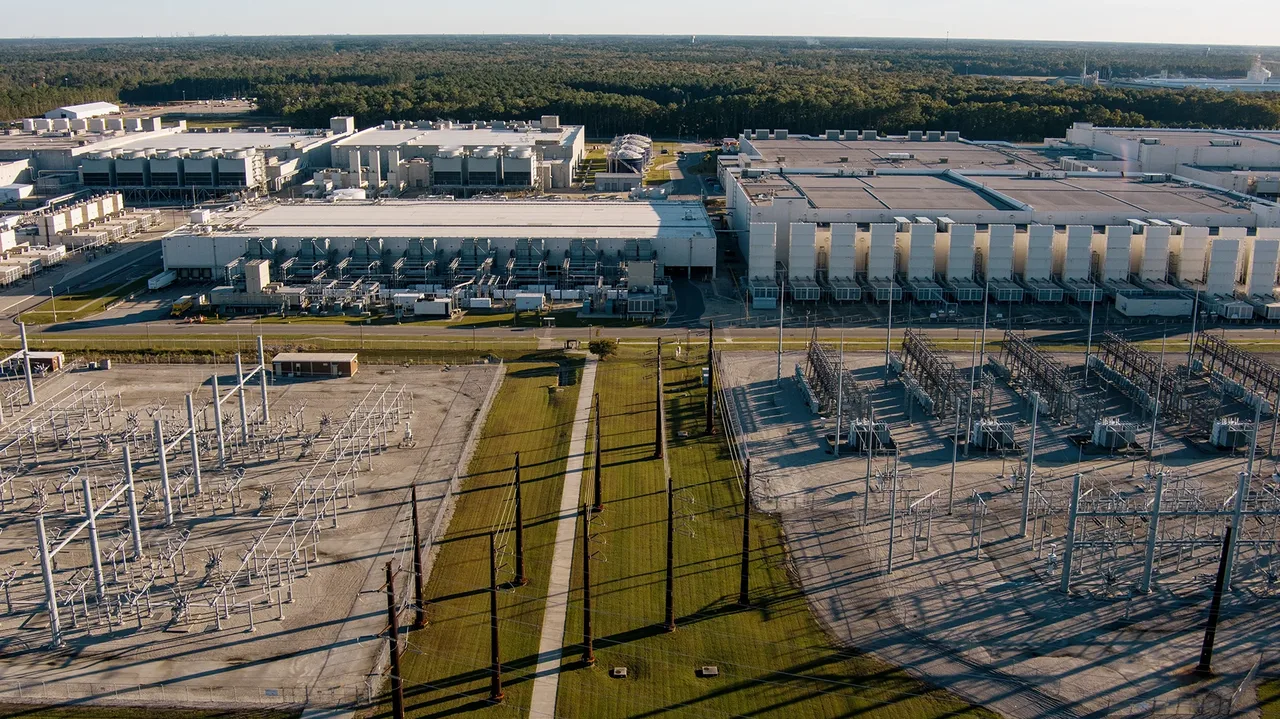
A Federal Alarm Just Went Off About Data Centers. Should a Building Owner Care?
Yes, if the building sits anywhere near a large data center. The nation's grid watchdog issued its highest-level alert this month after several data centers suddenly cut themselves off the power grid last year, once dropping 1,800 megawatts in an instant, enough to briefly unsettle the system around them. For a nearby property, the takeaway is simple: the giant computer warehouse down the road is now part of your building's reliability picture, and that belongs in how you plan for backup power and lease terms.
By Keith Reynolds | Publisher & Editor, ChargedUp!
What Happened
The North American Electric Reliability Corporation, the organization responsible for keeping the North American power grid stable, released its yearly report card this month and did something unusual. It issued a rare top-level alert, the highest of its three warning levels, with a list of actions grid operators must complete by August 3. The trigger was a new kind of problem. Several times last year, a single data center pulled its enormous electricity demand off the grid in a fraction of a second during a routine hiccup, the kind of brief fault the system shrugs off dozens of times a year. One February event dropped about 1,800 megawatts. A June event dropped about 1,300. To put that in scale, 1,800 megawatts is roughly the power draw of a mid-sized city vanishing and reappearing in moments.
A data center leaving the grid sounds harmless, even helpful, during a shortage. The problem is the suddenness. The grid is a balancing act between supply and demand at every instant. When a large demand disappears without warning, it throws that balance off and forces everything else on the system to scramble in order to compensate. Which can risk a wider disruption of the grid should this suddenness continue.
Why the Grid Was Already Fragile
This new problem landed on a system that was already under strain from a different direction. The same report found that the older power plants the grid leans on are breaking down more often. The rate at which conventional plants unexpectedly fail rose to 9.2% last year, above the usual 7%-8% range, according to the reliability report. Coal plants were the worst of it, with their failure rate climbing from 11.2% to 14.1%. Most large coal units are more than 40 years old and were never built to switch on and off as often as today's grid asks them to. Now the grid is being asked to absorb the fastest demand growth in decades at the very moment its oldest workhorses are becoming less dependable.
What This Means for a Property
For a building owner, developer, or planner, this is not an abstract engineering story. It changes three practical things.
First, reliability is now partly about the neighbors. A hyperscale data center on the same stretch of grid can create instability that reaches nearby properties, which raises the value of a building's own backup power and onsite generation. A property that can ride through a rough patch on its own batteries or generator is worth more in a neighborhood where the grid has become less predictable.
Second, this strengthens the case for owning a piece of your own power. Onsite solar, batteries, and the ability to reduce demand on command are no longer just cost-saving tools. They are insurance against a grid that its own watchdog has flagged as strained. That insurance shows up in net operating income, the income a building produces after expenses, because avoided disruptions and lower peak charges both protect the bottom line.
Third, for planners and developers weighing a large data center, this is a reliability cost to weigh alongside the tax revenue. A facility that can destabilize the local grid is a different neighbor than one designed to lean on its own generation and storage. The report is, in effect, a nudge toward requiring big new power users to manage their own demand rather than pushing the risk onto everyone else on the line.
The Bottom Line
The grid was able to hold last year, and no lights went out because of these events. The watchdog's alarm is a forward-looking warning, not a report of disaster. For the built environment, it lands as one more reason the most resilient building is the one that can generate, store, and manage a share of its own power. The neighbor's risk is now partly yours, and the hedge against it is something an owner can build.
