Nvidia’s AI Grid Vision: Writing Today's Power Problems into Tomorrow's Infrastructure Solutions
At GTC opening keynote, Nvidia makes physical layer of AI impossible to ignore
By Keith Reynolds | Publisher & Editor, ChargedUp!
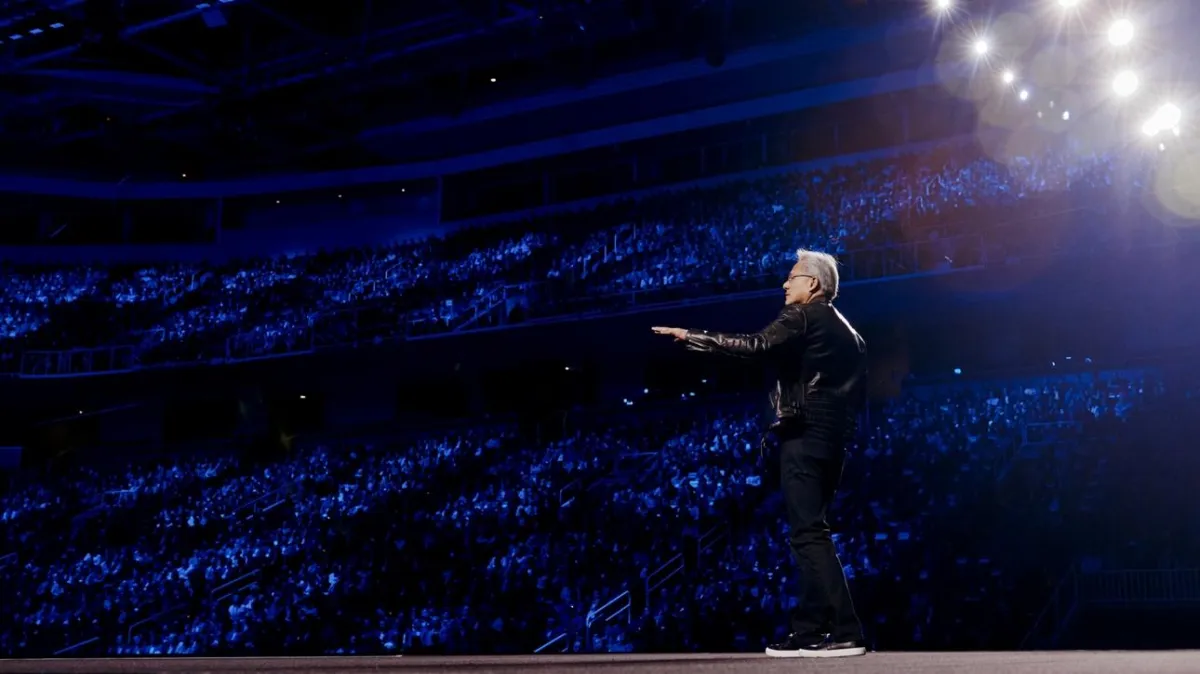
In his opening keynote at Nvidia’s GTC conference Monday, CEO Jensen Huang signaled that the next phase of artificial intelligence will unfold on physical ground: power, networks, cooling, location and the software that ties them together.
That framing matters because it marks a change in emphasis.
Up through today, most AI coverage has treated computing power as the star and everything else as support. Now, Nvidia is describing AI as a full-stack industrial system in which energy is not a background assumption, but the first constraint to future development. For owners, investors and operators, this framing positions AI of equal or greater significance as physical assets.
Nvidia aspires to redefine where AI can live
The strongest infrastructure signal from GTC was Nvidia’s continued push for what it calls an “AI grid" , a concept the company defines as a geographically distributed and interconnected AI infrastructure that works as a unified platform. Its telecom materials go further, describing a system that links AI factories, regional hubs and edge sites so workloads can run where they make the most sense based on latency, cost and available resources. This messaging sends a clear signal:
Nvidia is trying to make the AI boom less dependent on a handful of giant campuses and shift support toward a broader network of sites that can share the work.
This idea helps explain why a phrase circulating in conference commentary, “violently decentralized”, resonated so widely on Monday. Secondary coverage and conference notes used the phrase to describe what happens when the grid cannot support gigawatt-scale AI facilities everywhere they are wanted, forcing the industry to distribute compute more aggressively into regional and edge infrastructure. Essentially, Nvidia is arguing that AI workloads can increasingly be routed across a wider network of sites rather than waiting for a few centralized facilities to secure years of utility upgrades.
Why Nvidia's message matters now
Nvidia is not making this case in a vacuum. Reuters reported on company forecasts that AI hardware could reach at least $1 trillion by 2027, double its previous forecast. The news outlet also made clear why the company needs a bigger infrastructure story. Investors have become more skeptical about the economics of the AI buildout, especially as the industry moves from model training into inference, the stage where AI systems answer live requests and serve customers at scale. Inference puts more pressure on cost, latency and location than the earlier phase of giant centralized training runs.
That change in workload is what gives Nvidia’s distributed vision its urgency. If AI has to serve live users in many places, the optimal site may not always be the biggest campus. Rather, it may be the site with good enough power, strong network links and proximity to the demand. Nvidia’s telecom pages say telecom operators are now positioned to distribute AI through regional points of presence, central offices, mobile switching centers and cell sites. In other words: the company aspires to turn existing communications real estate into part of the AI-serving layer.
The orchestration layer: The heart of this story
The bold part of Nvidia’s vision goes beyond the distribution of GPUs to more sites to incorporate an orchestration software layer required to make a dispersed network behave like one system. Nvidia’s AI grid materials say this orchestration layer provides real-time visibility into each node’s capabilities, health and resource availability, then routes workloads to the most suitable place. The company’s AI-RAN literature uses similar language, saying the AI-RAN Orchestrator dynamically allocates compute resources within or across GPUs to optimize usage and lower operating costs. The central idea is one of a virtual system built on many physical sites.
For property readers, this is where the story gets concrete. If orchestration works well enough, the market value of a site may change. A facility no longer has to be the single best place in the country to host a workload. It may only need to be a credible node in a larger system: connected, upgradable, power-aware and capable of taking overflow or local inference demand when conditions make it attractive. The winners in that world may not be just the owners of giant campuses, but may include the owners of smaller regional assets that can be integrated into a distributed AI fabric.
Key Takeaways
One of the most powerful companies in AI is now openly building its strategy around the limits of the power grid and the geography of infrastructure. Huang’s keynote and Nvidia’s surrounding announcements point to a future in which AI workloads are increasingly routed to where power, networks and economics line up best, rather than waiting for a few massive sites to solve every problem first. That is why Monday’s conference was a genuine infrastructure event: It moved the conversation from silicon alone to the physical system underneath intelligence, putting energy, telecom real estate and distributed capacity much closer to the center of the AI story.
Additional Sources and Further Reading
