The Programmable Grid: DG Matrix is Scaling the Solid-State On-Ramp
By Keith Reynolds | Publisher & Editor, ChargedUp!
Silicon has shifted the narrative surrounding electrification and AI data centers, with conversations moving from venture funding rounds to industrial deployment timelines. At the center of this pivot is a technology known as a solid-state transformer (SST), and Morrisville, NC-based DG Matrix is a leader in this space.
On February 18th, DG Matrix secured a landmark $60 million Series A funding round led by Engine Ventures, with strategic backing from global heavyweights like ABB, Chevron, and Mitsubishi Heavy Industries. This brings the firm’s total capital to over $100 million. While this funding number is significant, real estate owners and grid managers should focus on the execution signals coming from the company this past week.
The Power Router vs. Legacy Iron
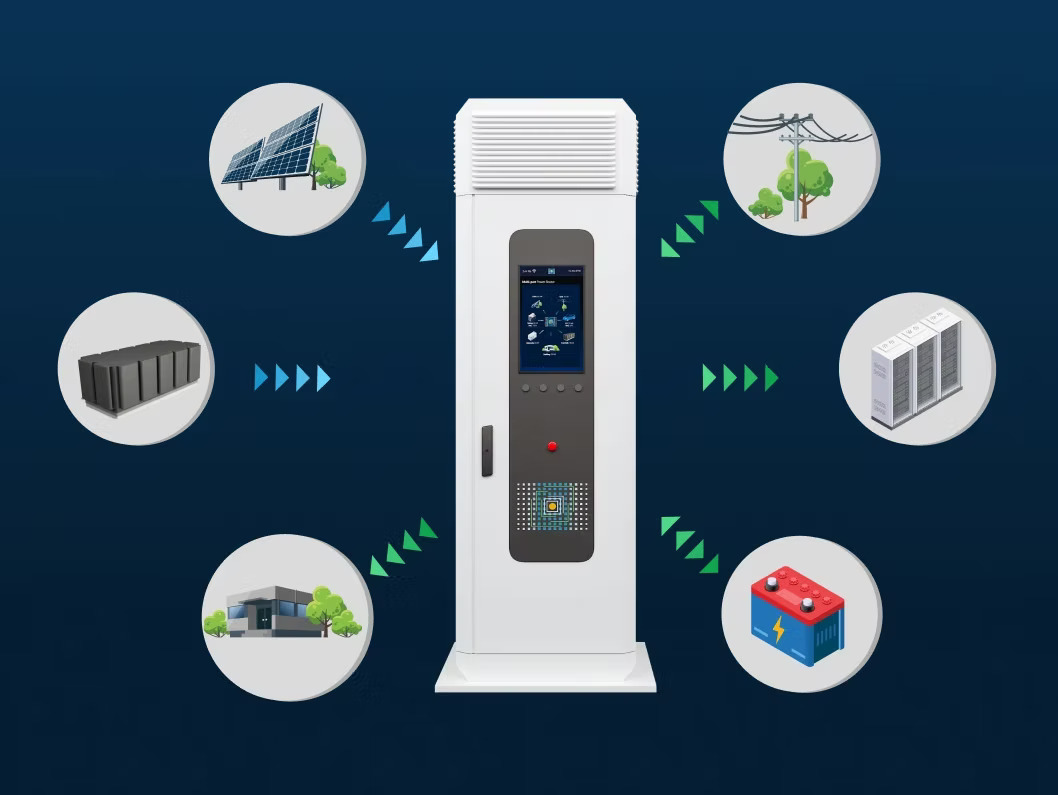
The company positions its Interport™ core product as a "power router." Unlike traditional iron-core transformers - bulky, oil-filled devices that have remained fundamentally unchanged for a century, the DG Matrix's Interport is a software-defined, multi-port solid-state platform.
The Interport is designed to replace 10 to 15 discrete legacy components, including traditional transformers, inverters, and uninterruptible power supplies (UPS). For data center operators, the impact is spatial as much as it is electrical: a single Interport can handle up to 2.4 megawatts of connections, replacing two massive pallets of legacy conversion gear with a compact, 4-by-4-foot footprint.
Execution Milestones: June 2026 and Beyond
DG Matrix’s inclusion in the 2026 Global Cleantech 100 list signals a transition from cleantech curiosity to economic durability. This week, the company confirmed that the first production units are scheduled for customer deployment in June 2026.
To support this ramp-up, DG Matrix has announced a nationwide strategic collaboration with PowerSecure, a subsidiary of Southern Company. This partnership provides the essential last mile of deployment: nationwide engineering, procurement, and construction (EPC) capabilities, combined with the lifecycle support that institutional real estate owners require.
The Flexibility Mandate: Avoiding "Stranded Assets"
The real-world pressure on data center operators is driving a shift away from architectural specialization toward radical flexibility. In the current "AI Factory" environment, building for a single niche is a significant business risk. Operators are finding that the specific voltage standards or density requirements their customers demand today may be obsolete in 18 months.
The Interport’s multi-port logic addresses this volatility. It allows sites to seamlessly route power from solar, utility grids, and large-scale batteries simultaneously. By reaching efficiencies of 95–98% (compared to the 82–90% range of legacy systems), the platform reduces the two biggest headaches for AI operators: power loss and the cooling costs associated with waste heat.
Strategic Takeaway
The shift from traditional grid hardware to digital, addressable modular solutions have reached an industrial tipping point. Investors are lining up. The challenge is no longer just finding power, but ensuring that power is programmable and flexible enough to survive a rapidly changing market.
Transitioning to "cellular power" is being driven by the massive investments in data centers currently underway. Commercialization of the solid-state transformer by DG Matrix and other companies coming to market will facilitate the shift to distributed energy. As DG Matrix moves into its production phase this June, the era of the "dumb" grid is officially on notice.
Envisioning a Cellular Power Future
As DG Matrix scales, it is focused on data centers, EV charging hubs and remote microgrids. Their goal is to provide consistent power from wind, solar, and batteries without waiting for multi-year utility substation upgrades. As a result, the most valuable properties of the future won't just be those with a grid connection, but those with a power platform and the digital intelligence empowering them to manage their own local energy cell.
