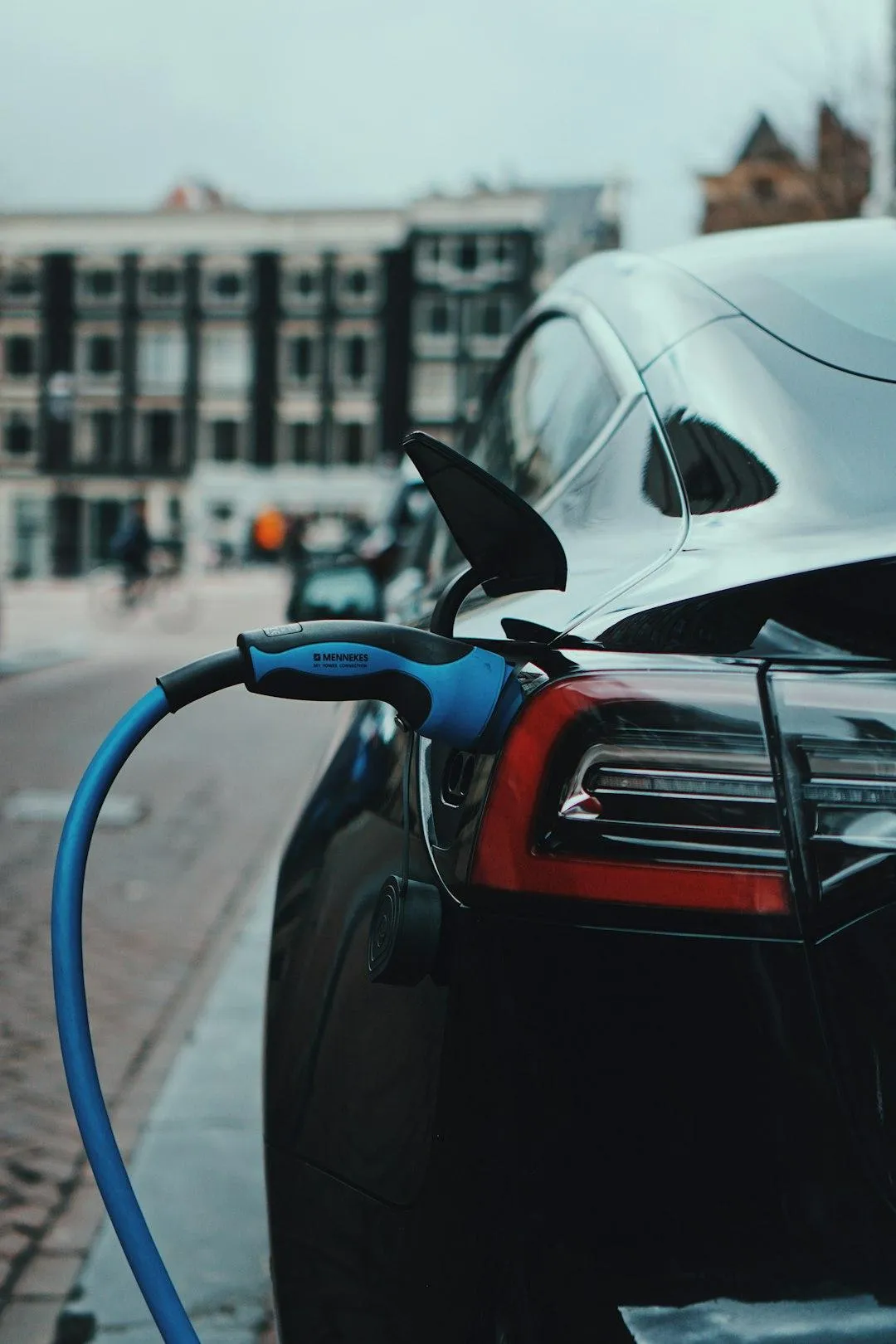
The Used-EV Inflection and What It Means for Charging
By Keith Reynolds | Publisher & Editor, ChargedUp!
The Used-EV Inflection and What It Means for Charging Underwriting
A record month for used EV sales, a major urban charging merger, and new public charging deployments all point to the same thing: charging is becoming more operational, more mainstream, and more relevant to real estate economics.
Key takeaways
Used EV growth broadens the charging customer beyond affluent early adopters.
Public and workplace charging may matter more as the EV fleet shifts into the secondary market.
Charging strategy should now be built around user behavior, dwell time, and reliability.
For much of the last year, most US EV market news has been discouraging. New-EV growth cooled, incentives changed, and market commentary seemed to suggest that the whole charging buildout needed to be rethought. But there is a more useful signal for property owners, coming from a different part of the market.
Used EV sales hit 42,924 units in March, according to Cox Automotive, a monthly record. That may seem like a minor story, but it matters for properties that host charging infrastructure.
The reason is simple. Used-EV growth expands the user base beyond the high-income early adopter who was most likely to charge at home and absorb premium pricing without much friction. The next wave of EV drivers is more likely to be price-sensitive, more dependent on shared infrastructure, and less patient with unreliable charging. That changes the nature of the market a shopping center, apartment owner, office landlord, or municipality is actually serving.
A broader used-EV customer base makes public and workplace charging more relevant, because a larger share of drivers may lack ideal home-charging setups or may rely on multiple charging environments across the week, making the site with the right dwell time, payment flow, uptime, and pricing logic all the more essential.
This trend explains why operating-side stories in charging matter now. Voltera and Revel are merging to build a larger urban charging platform around fleets and autonomous vehicles, with more than 1,000 stalls across 11 major U.S. markets expected in the combined network. Philadelphia is expanding its public charging buildout with hundreds of additional ports. Finally, in San Francisco, the school-bus electrification story is showing how charging assets can also be planned as grid-facing assets through bidirectional capability.
These are different stories on the surface, but they all share a common message. Charging is moving away from the era in which many installations were justified by broad expectations and general EV enthusiasm, and toward an era in which the strongest projects are tied to a defined user group, a repeatable operating case, and clear relationship between infrastructure and utilization.
For real estate owners, that is good news, even if it asks more of them. The first wave of charging often carried a fuzzy logic: install chargers because EVs are coming, and value will somehow follow. The better question now is more disciplined. Who will use the chargers, how often, at what price tolerance, and under what service expectations?
Used-EV growth increases that question's urgency as the emerging customer becomes more mainstream. A luxury buyer in a single-family home with a garage may barely notice a broken public charger, but a renter, commuter, rideshare driver, or budget-conscious used-EV owner may care a great deal. That means reliability and payment design start to matter more than they did when many site hosts thought of chargers primarily as brand signals.
There is another important implication. The used-EV market can continue expanding even when new-EV headlines get noisy. Lease returns, prior growth in the new market, and falling vehicle prices can all feed a larger installed base of EV drivers who still need practical places to charge. For owners, that means a soft patch in new-EV sentiment does not necessarily mean weaker demand for charging at the property level. In some local markets, the opposite may be true.
This is also why one-size-fits-all charging plans are becoming less useful. A suburban office property may need a different mix of workplace charging than an apartment building, neighborhood retail center, or municipal curbside network. The real objective is not simply adding plugs. It is matching infrastructure to behavior.
The IEA’s latest global EV outlook reinforces these themes. The market is still expanding, but not uniformly. Geography, policy, price point, and infrastructure conditions shape adoption differently across segments, making site-level charging strategy essential: Owners cannot rely on one national trendline to tell them what will work on a specific property.
The emerging lesson is that charging is becoming a sharper real estate product that needs to be underwritten more like parking, access, or other essential tenant service than an abstract ESG add-on. The operator must know the user, the hardware must stay up, and the payment experience must make sense for a more price-aware audience.
In short, the used-EV inflection is not a side story, but a stronger signal for the next phase of charging. It suggests the customer base is broadening, the need for dependable public and workplace charging is deepening, and the projects most likely to succeed will be built around how real people charge in real places.
For commercial real estate, it points toward a market where charging becomes less speculative and more operational. That is exactly the kind of transition owners can underwrite.
Why it matters for CRE
As EV ownership spreads into the secondary market, the best charging sites will match real user behavior with reliable, well-priced infrastructure.
Sources
https://electrek.co/2026/05/27/philadelphia-just-announced-435-more-ev-charging-ports/
https://insideevs.com/news/793503/used-ev-market-us-march-sales-2026/
https://www.coxautoinc.com/insights/ev-market-monitor-march-2026/
