Used Electric Vehicles Outperform the Entire Wholesale Market, and Charging Demand Changes Address
By Keith Reynolds | Publisher & Editor, ChargedUp!
The Manheim used vehicle EV Index rose 12 percent year over year in June while the non-EV index rose 1.7 percent. Used electric vehicles are appreciating roughly seven times faster than the rest of the wholesale market, and used electric vehicle prices now sit within about $1,300 of comparable gasoline vehicles, down from a gap exceeding $10,000 in early 2023. Days' supply for used electric vehicles stands at 42 against 38 for combustion vehicles, meaning they turn on dealer lots at nearly the same pace.
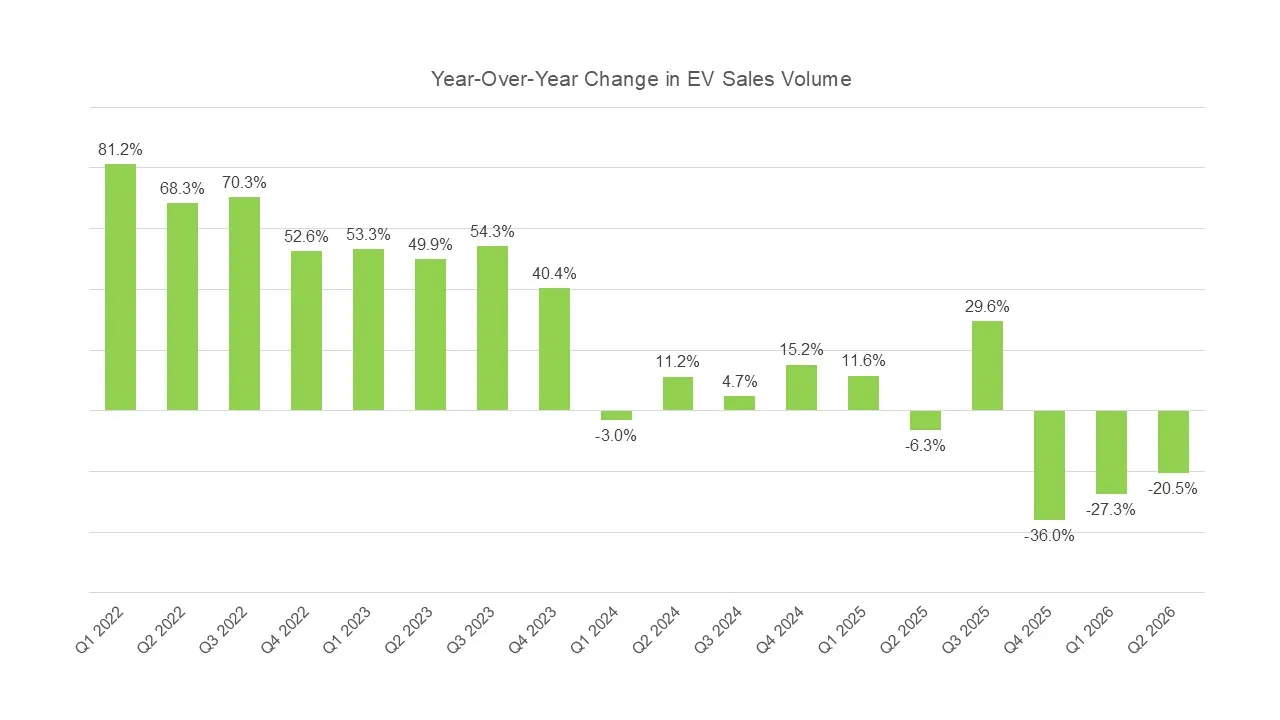
New electric vehicle sales tell the opposite story. Kelley Blue Book estimates 247,226 units sold in the second quarter, up 14.7 percent sequentially but down 20.5 percent year over year for a third consecutive quarter. Average new electric vehicle transaction prices fell for a sixth straight month to $56,238, with incentives running 13 percent of transaction price against an industry average of 7 percent. The two markets have split, and the split relocates charging demand from the driveway to the property.
The Buyer Changes, and So Does the Parking Space
A $56,000 new electric vehicle sells to a household with a garage and a Level 2 charger installed in it. A $34,821 used electric vehicle sells to a household that may have neither. Cox Automotive projects monthly lease returns climbing toward 240,000 vehicles, with roughly 50,000 of them electric, feeding a used market that grew 24.7 percent year over year in May. That inventory flows toward renters, suburban second-car households, and value-focused buyers, a population concentrated in exactly the multifamily, workplace, and retail settings where charging must be provided rather than owned.
The underwriting consequence is direct. Charger utilization at a multifamily property tracks the used electric vehicle market far more closely than it tracks new vehicle sales headlines, and the used market is expanding while the new market contracts. An owner who read the 20.5 percent decline in new sales and shelved a charging project misread the demand signal for their own asset. The relevant number is the 24.7 percent increase in used sales and the near-parity pricing that keeps pulling first-time electric buyers into the pool.
Hybrids Occupy the Middle, and They Still Plug In
Hybrid sales are forecast up roughly 9 percent in the first half of 2026, and some nameplates that once offered gasoline powertrains now sell exclusively as hybrids. Toyota's second quarter rose 1.1 percent on approximately 20 percent growth in electrified vehicles while General Motors declined 4.2 percent with a broad electric lineup and a single hybrid model. Elevated fuel prices, sharpened by the collapse of the Iran ceasefire and Brent crude above $78, continue steering buyers toward efficiency.
Plug-in hybrids change the charging math at a property in a useful way. They draw less energy per session and tolerate Level 2 charging comfortably, which means a site can serve more vehicles per port and size its electrical service more modestly than a pure battery electric assumption would require. A charging plan built solely around battery electric adoption curves oversizes the infrastructure and understates the number of tenants served. The mixed fleet arriving at American properties over the next three years wants more ports at lower power, not fewer ports at higher power.
The Capital Stack for Charging Has Been Rebuilt
The Section 30C alternative fuel refueling property credit, worth 30 percent of per-port infrastructure cost up to $100,000 with prevailing wage compliance, expired for equipment placed in service after June 30. State and utility programs now carry the incentive load, and their windows are short. Illinois opened a roughly $30 million charging round with applications due July 20. Utility make-ready programs and commercial electric vehicle rate structures have become the primary offset for installation cost.
Third-party ownership structures have moved to fill the same gap. Operators are deploying turnkey multifamily charging under models where the provider owns the infrastructure and covers energy cost reimbursement, maintenance, insurance, and repairs at no capital cost to the landlord. In a market where debt-financed capital expenditure remains expensive, a charging amenity that arrives without a capital call and without an operating obligation solves the two objections that have stalled multifamily charging for a decade.
Design for the Demand That Is Actually Coming
Three specifications follow from the data. Size electrical service against a mixed fleet of used battery electric vehicles and plug-in hybrids rather than a premium new-vehicle profile, which typically means more Level 2 ports and less service upgrade. Use managed charging from the outset, since shifting load off the site peak can cut maximum demand by as much as 60 percent per the International Energy Agency, and demand charges of $8 to $15 per kilowatt make that reduction the difference between an amenity that pays and one that bleeds. And treat charging as a tenant retention instrument priced against the used vehicle market, because that is where the residents plugging in are actually buying.
