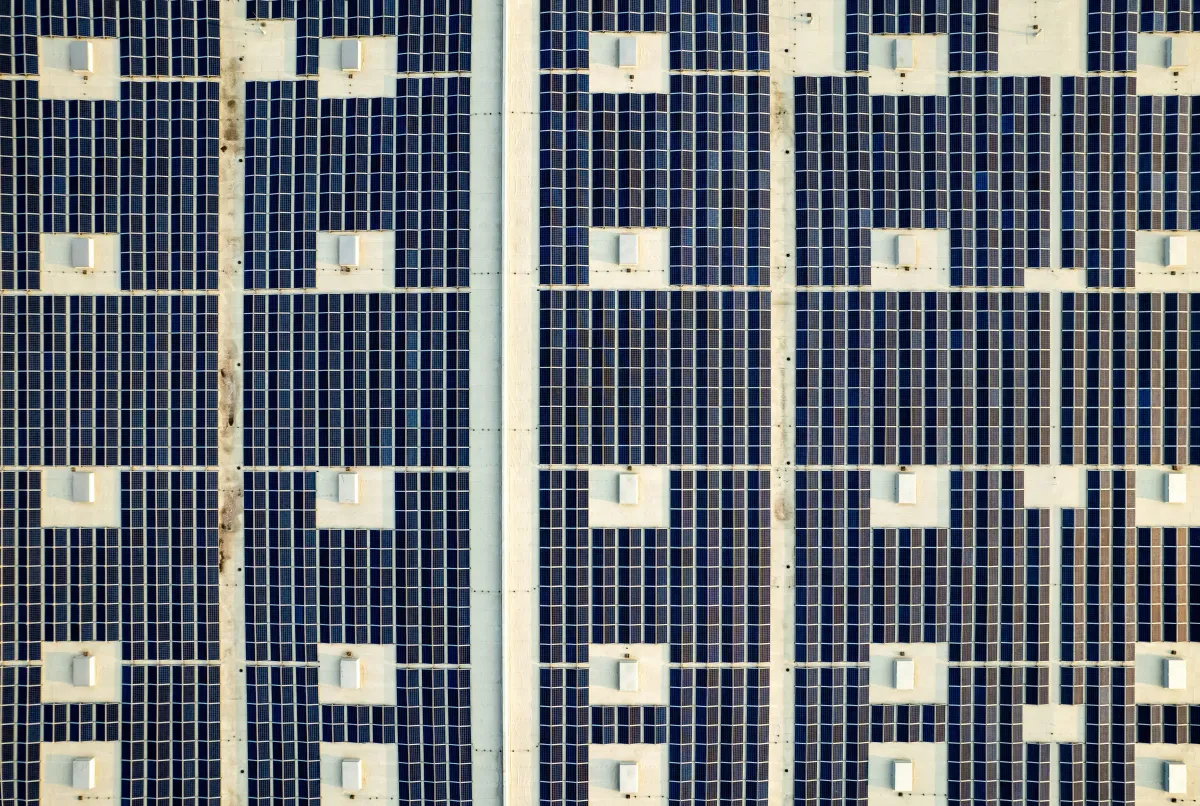
Costco Walked Its Warehouses Off the Grid. Can Other Owners Follow the Playbook?
Yes, and that is the point. Costco has installed self-contained solar-and-battery systems that run several of its facilities without any connection to the utility grid, including its largest U.S. distribution center. The goal was not a green headline. It was to escape rising power costs, skip the multi-year wait to connect new equipment, and remove the risk of an outage. The same approach, at smaller scale, is available to warehouse, retail, and industrial owners, and a Costco executive framed the logic in terms every owner understands: energy is a strategic asset, not just a bill.
By Keith Reynolds | Publisher & Editor, ChargedUp!
What Costco Built
Working with a specialist called Trinity Energy, Costco has deployed fully off-grid solar-and-battery systems at several sites, including its Mira Loma facility in California, the retailer's largest distribution center in the world, along with a site in Ontario, California, and a standalone tire center in Norwalk, Connecticut. Off-grid means exactly what it sounds like: the systems generate, store, and deliver power entirely on-site, with no wire running back to the utility. The Norwalk installation alone is designed to deliver up to 2 megawatt-hours of power a day, enough to run the tire center's tools and lighting without drawing a watt from the grid.
The systems do more than keep the lights on. At the California distribution centers, the same solar and storage also charge fleets of electric yard trucks, the heavy vehicles that move trailers around a warehouse, powering 20 electric trucks across the two sites. That matters because charging a truck fleet is often the single biggest new electrical load a logistics site adds, and the usual path, asking the utility for a big service upgrade, can take years. Costco skipped the line by building its own power.
Why an Owner Would Leave the Grid on Purpose
Leaving the grid sounds radical until you look at what it avoids. Three specific pains drove the decision, and every commercial owner shares at least one of them.
The first is the interconnection delay. Connecting significant new load to the grid, or upgrading service to handle it, routinely takes years in strained regions, and the wait has grown worse as data centers crowd the queue. By going off-grid, Costco avoided that wait entirely, turning a project that might have stalled for years into one it could switch on when ready. For a business trying to electrify a fleet on a schedule, that speed is worth real money.
The second is demand charges. A large share of a commercial electric bill is not the energy itself but the demand charge, a fee based on the single highest burst of power a building draws in a month. A solar-and-battery system smooths those bursts, and an off-grid system removes them from the utility bill entirely. The third is reliability. An off-grid site simply does not care whether the utility has a bad day, which for a distribution center moving goods around the clock is a form of insurance against expensive downtime.
Energy as an Asset, Not an Expense
The most useful part of the Costco story is how its own leaders describe it. Shay Reed, an assistant general merchandising manager at Costco, put it directly: energy should be treated as a necessary, finite resource rather than an expense or a balance-sheet charge, and the work with Trinity shows how energy can become a real asset that secures operations and reduces risk. That reframing is the whole thesis of modern distributed energy compressed into a sentence. A power bill is money that leaves the business every month and never comes back. A power system that a business owns is an asset on the balance sheet that lowers costs, protects operations, and holds value.
This is not unique to Costco, and that is what makes it a playbook rather than a stunt. The retailer already operates more than 123 on-site solar systems worldwide and is extending the off-grid model as a repeatable template. The equipment involved, solar panels, batteries, inverters that convert stored power into usable electricity, and controls that manage the flow, is the same equipment available to any commercial owner. What Costco added was the decision to treat it as core infrastructure rather than an optional upgrade.
The Broader Shift This Reflects
Costco is early, but it is not alone, and the market data shows why the timing makes sense. The cost of a battery storage project fell 27% in a single year to a record low, according to BloombergNEF, and solar paired with storage now beats the cost of a new gas plant in a growing number of regions. At the same time, the grid an owner would otherwise rely on is getting more crowded and less certain, as the emergency measures at regional grid operators this summer make plain. Falling equipment costs on one side and a straining grid on the other push toward the same decision Costco made.
There is a real constraint worth naming. In the United States, battery system costs have run higher than the global benchmark because of tariffs and supply rules, and going fully off-grid is a larger commitment than simply adding solar. Off-grid works best where a site has room for panels, a predictable load, and a strong reason to avoid the utility queue, which describes distribution centers, industrial sites, and fleet depots better than it describes a downtown office tower. Most owners will land somewhere short of fully off-grid, using solar, storage, and controls to lean on the grid less rather than leave it entirely. The Costco model marks the far end of a spectrum every owner can move along.
Key Takeaways
The lesson is not that every building should cut the wire. It is that the most sophisticated owners now treat energy as something to own and manage rather than a cost to absorb, and that the tools to do so are proven and getting cheaper. An owner can start modestly: add solar to offset the daytime bill, add a battery to cut demand charges and provide backup, add controls to earn demand-response revenue, and design new projects to ask less of a crowded grid. Each step moves energy a little further from the expense column and toward the asset column.
Starting Points for Smaller Owners
The Costco example is a Fortune 50 company acting at scale, which can make it feel out of reach. The path for a mid-sized owner is more incremental, and it does not begin with leaving the grid. It begins with understanding the bill. The first move is to read the utility tariff and separate the energy charge, what a building pays per unit of electricity, from the demand charge, the fee tied to the single highest burst of power drawn in the month. On many commercial bills the demand charge is a surprisingly large share, and it is the part a battery attacks most directly. An owner who knows how much of the bill is demand charge already knows most of what a battery is worth to them.
From there the sequence is straightforward. Solar lowers the daytime energy charge. A battery shaves the monthly demand peak and provides backup during an outage. Controls that reduce load on a utility signal can earn demand-response payments during the peak events that stress the grid. Only at the far end, for a site with the right load, the space, and a strong reason to skip the utility queue, does going fully off-grid make sense. Most owners will capture the majority of the benefit well before that point, using the grid as a backstop while leaning on it less. The Costco model is valuable less as a literal instruction than as proof that the whole spectrum works, and that a serious operator has run it to the end.
Every $1,000 of annual energy cost a building removes adds roughly $12,500 to its value at an 8% capitalization rate. Costco reached the end of that logic and walked its warehouses off the grid. The playbook it left behind works at any size, and in a period of scarce and rising power costs, it is one of the clearest paths to protecting a building's income and its value.
