More Evidence That Your Building Is a Power Plant. Here Is the Business Model That Proves It.
By Keith Reynolds | Publisher & Editor, ChargedUp!
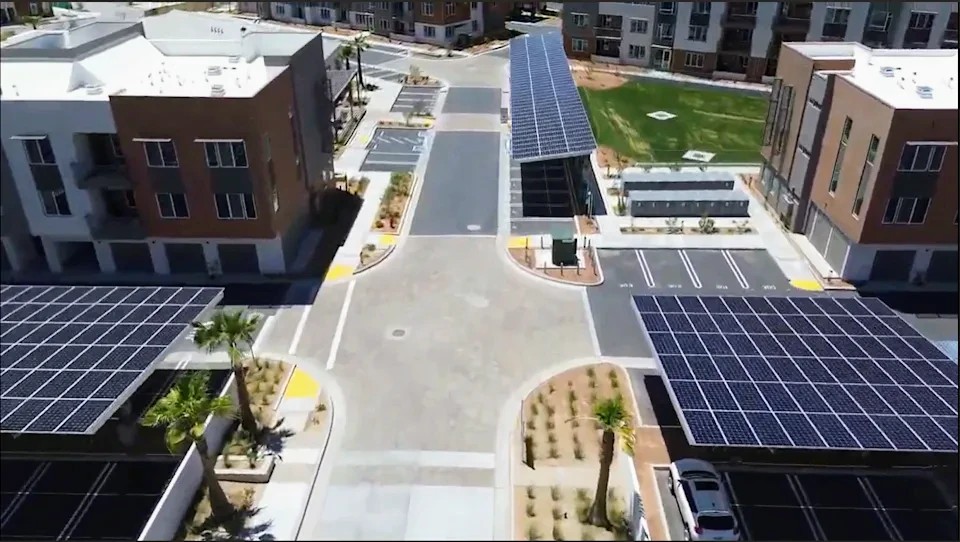
A 977-kilowatt solar system went live this week at Millennium Apartments, a 330-unit community in Palm Desert, California. The developer, Metonic Real Estate Solutions, spent exactly zero capital to make it happen. PearlX, the distributed energy infrastructure company that built, owns, and operates the system, paid Metonic rent for the right to put it there.
This is more than a pilot program. It is a commercial transaction being replicated at scale across the $1.2 billion portfolio Metonic manages across 26 markets. It is also the clearest available demonstration of what happens when the energy transition stops being framed as a cost and starts being structured as a real estate investment.
The deal structure is worth examining in detail, because it eliminates the primary objection that most multifamily owners cite when the subject of distributed energy comes up: capital exposure.
The Master Lease Model
Under PearlX's 25-year master lease, the energy company finances and installs the full system - including solar panels, storage, EV charging infrastructure, and smart energy management software, at no cost to the property owner. PearlX then manages the building's energy load and sells power to residents, earning its return through electricity sales and grid services revenue. In exchange for the right to operate on the property, PearlX pays the owner rent. The owner gets ongoing income, improved NOI, and a property that qualifies as a grid asset — all without writing a check.
PearlX calls this the Energy Estate model. The framing is deliberate. A building's rooftop, parking structure, electrical infrastructure, and load profile are assets - real estate assets - that can be leased just as a retail space or parking lot can be leased. The difference is that the tenant is an energy company rather than a retailer, and the income stream comes from electricity rather than foot traffic.
The Palm Desert system includes shaded solar carports - a high-demand amenity in the Coachella Valley, and fully complies with California's Title 24 solar mandate. Residents receive lower energy costs. Metonic receives NOI improvement and rental income from PearlX without capital deployment. PearlX earns its return through long-term electricity sales and grid services participation. The utility receives a distributed resource that reduces peak demand on its system.
Why the Numbers Work Now
The economics of the Energy Estate model are driven by four converging forces, each of which has strengthened since 2020.
First, commercial electricity rates have risen at nearly twice the rate of inflation. The U.S. Energy Information Administration documented commercial electricity rates up 7.8 percent year-over-year as of December 2025, before the current Hormuz disruption added additional pressure. The wider the gap between grid electricity rates and the cost of onsite generation, the stronger the long-term return for the energy company operating the system - and the larger the rent it can afford to pay the property owner.
Second, the grid services revenue available to distributed assets has grown materially. Lunar Energy reported in February 2026 that customers participating in virtual power plant programs earned an average of $464 in grid services revenue in 2025, compared to essentially nothing from conventional battery operation. New Jersey and Illinois have mandated VPP programs for utilities, expanding the market for commercial building participation. A building that participates in a VPP is not merely a ratepayer; it is dispatchable infrastructure that earns revenue from the grid.
Third, the federal incentive stack makes the first year of a project dramatically more favorable than subsequent years. The Section 48E Investment Tax Credit provides 30 to 50 percent of project cost for onsite solar and standalone battery storage. The 100 percent bonus depreciation, restored for equipment acquired after January 19, 2025, allows immediate first-year expensing of qualified energy equipment. These mechanisms are available to the operating company — PearlX in this case, rather than the property owner. That is part of why the master lease structure works: the energy company can capture incentives that the property owner might not be positioned to use.
Fourth, and most urgently, the Section 179D energy efficiency deduction of up to $5.94 per square foot expires for new construction starts on June 30, 2026. A 100,000-square-foot building eligible for the full deduction captures $594,000 in immediate tax benefit — but only if construction begins before that date. The incentive calendar is a real constraint, and it is running.
The Asset Class Implications
The Energy Estate model has implications that extend beyond individual deals. It changes the category of asset that a commercial building represents.
Buildings with verified energy resilience, such as documented onsite generation, storage, and grid-interactive controls, are recording rental premiums of up to 32 percent over conventionally powered buildings in comparable locations, per JLL analysis published in March 2026. Energy costs now represent up to 26 percent of rental value in some commercial markets. Institutional buyers, triple-net tenants with national portfolios, and corporate occupiers managing energy budgets across hundreds of locations ask about onsite generation capacity as a standard due diligence item.
The Galvanize Real Estate fund, which closed at $370 million in March 2026 with pension fund and foundation capital, was built explicitly around the thesis that undercapitalized commercial buildings with onsite energy potential represent a large and growing opportunity to drive NOI growth. The thesis is not that energy efficiency is an ESG commitment. It is that buildings capable of participating in energy markets as active players will systematically outperform buildings that cannot.
The master lease structure is one path to that participation. It requires no capital, no operational expertise in energy management, and no utility negotiation from the property owner. It requires a long-term agreement, a willingness to let an energy company manage building load, and enough roof or parking area to make the economics work.
For the 20 million multifamily units across the United States — the largest single category of untapped distributed energy resource in the country — the master lease model is the most accessible entry point into the transition that is already reshaping how institutional capital values the built environment.
The Palm Desert system is a 977-kilowatt proof of concept. The 25-year master lease is the contract structure. The question for every multifamily owner who has not yet started this conversation is not whether the model works. It is whether they will capture the incentive window that runs until June 30.
