What Do Prologis, Kaiser Permanente and the U.S. Army Know About Microgrids That Most Landlords Do Not?
The onsite power model that data centers pioneered is now spreading to warehouses, hospitals, campuses and military bases. For property owners, it is becoming a tool to protect Net Operating Income, shorten time to occupancy and lift asset value.
By Keith Reynolds | Publisher & Editor, ChargedUp!
They treat electricity as an asset they control, not a bill they receive. A microgrid is a self-contained power system, usually onsite solar, battery storage and sometimes a generator, that can run a building on its own when the utility grid fails. Data centers adopted it first because they cannot tolerate downtime. Now industrial, healthcare, higher-education and defense owners are deploying the same approach to hedge against rising rates, bypass multiyear utility interconnection queues and command a resilience premium at sale.
Key Facts at a Glance
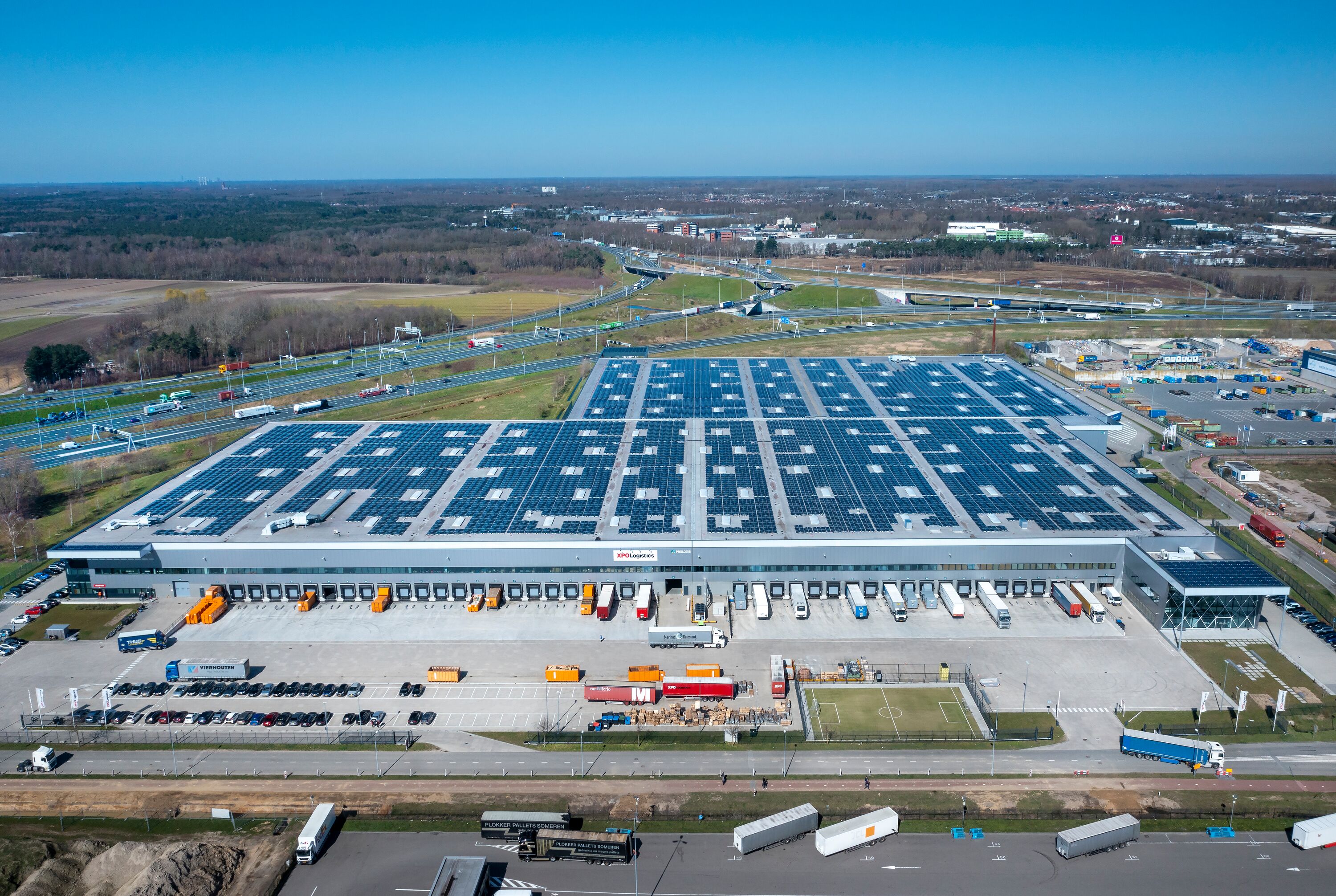
Prologis, the largest industrial landlord in the United States, has surpassed 1.3 gigawatts of onsite solar and battery storage across its warehouse portfolio and has opened its first microgrid-powered logistics facility.
Kaiser Permanente commissioned a 2-megawatt solar microgrid paired with 9 megawatt-hours of battery storage at its Ontario, California medical center, one of the largest hospital renewable microgrids in the country.
Princeton University's microgrid kept the campus powered and open when Superstorm Sandy blacked out the surrounding region, a case study now cited across the sector.
The U.S. Army has directed a microgrid on every one of its installations by 2035 as part of its climate and readiness strategy.
Onsite systems can come online in months while utility interconnection and substation upgrades run for years, letting a building open and begin earning rent sooner.
What Is a Microgrid, and Why Did Data Centers Adopt It First?
A microgrid is a cluster of onsite generation and storage that serves a defined set of buildings and can disconnect from the utility grid to run independently. That ability to separate and keep operating is called islanding. When the wider grid goes dark, an islanded property keeps its lights, elevators, refrigeration and servers running on locally generated and stored power.
Artificial intelligence data centers embraced the model because their business collapses during an outage and because utility interconnection queues now stretch for years. Rather than wait for a substation upgrade, operators build power onsite and open sooner. Enchanted Rock, which supplies resilient natural gas microgrids, now markets a resiliency-as-a-service product directly to data center developers. The same logic, secured electricity as a precondition for operating, is what other property types are beginning to adopt.
How Are Industrial and Logistics Owners Using Microgrids?
Industrial owners are converting large warehouse roofs and parking fields into revenue-producing power plants. Prologis has crossed 1.3 gigawatts of onsite solar and battery storage and treats energy as a distinct business line, selling power to tenants and monetizing storage. The company has also opened its first microgrid-powered logistics facility, a signal that the warehouse of the next decade ships electrons as well as parcels.
For a landlord, the appeal is direct. Onsite generation shields the building from utility rate spikes and demand charges, the fees utilities levy based on a customer's highest 15-minute power draw in a billing cycle. Stable, lower operating costs raise Net Operating Income, and at an 8 percent capitalization rate, every 1,000 dollars of durable annual NOI improvement adds roughly 12,500 dollars to a property's value. Cold storage and logistics tenants, whose inventory spoils in a blackout, will pay a premium for a site that cannot go dark.
Why Are Hospitals and Grocery Chains Building Microgrids?
Life safety and inventory protection drive these two sectors. Kaiser Permanente's Ontario, California medical center runs on a 2-megawatt solar microgrid with 9 megawatt-hours of storage, allowing the hospital to sustain critical care through a grid failure while cutting emissions and cost the rest of the year. The U.S. Department of Energy has profiled the project as a national model.
Grocery operator H-E-B installed microgrids across Texas stores after learning that a store with power becomes a community anchor during a disaster. Its systems kept stores open through Hurricane Harvey and later Texas grid emergencies, protecting perishable inventory and preserving sales that competitors lost. For retail and medical office landlords, the read-through is that tenants in these categories increasingly treat backup power as a leasing requirement.
What About Campuses and Military Bases?
Campuses and defense installations show what a mature, portfolio-scale microgrid looks like. Princeton University's microgrid famously islanded during Superstorm Sandy, keeping the campus running and serving as a refuge while the regional grid was down. UC San Diego operates one of the most advanced microgrids in the country, meeting roughly 85 percent of campus electricity demand from onsite generation and storage.
The federal government has made the largest institutional commitment. The U.S. Army has ordered a microgrid on every installation by 2035, framing onsite power as a matter of mission readiness rather than sustainability alone. A base, like a corporate campus or a mixed-use district, is a portfolio of buildings behind a single point of interconnection, which is exactly the condition under which a microgrid pencils.
How Do Owners Pay for Onsite Power?
Owners rarely fund these systems with cash. The most common path is a third-party power purchase agreement (PPA), under which a developer installs and owns the solar, storage or microgrid onsite and sells the electricity to the building at a contracted rate, sparing the owner the capital cost. Energy-as-a-service arrangements go further, bundling design, construction, operation and maintenance into a single service contract. For owners who prefer to own the asset, financing options include equipment leases and, in more than 30 states, Commercial Property Assessed Clean Energy (C-PACE), a fixed-rate assessment repaid through the property tax bill that transfers on sale. The federal Investment Tax Credit and accelerated depreciation further improve the economics for owned systems.
The financing question is no longer whether onsite power can be paid for, but which structure fits the balance sheet. An owner focused on cash flow often chooses a PPA; an owner focused on long-term value and tax benefits may prefer to own.
Where Is the Technology Heading Next?
Three developments will shape the next phase. First, aggregation: utilities and third parties are bundling many small onsite batteries into virtual power plants (VPPs), networks that act as a single dispatchable resource and pay owners for feeding power back at peak. That turns a resilience asset into a recurring revenue stream.
Second, hardware consolidation. Solid-state transformers and 800-volt direct current architectures, now moving from data centers into commercial buildings, can replace rooms full of legacy electrical gear with a single intelligent hub, cutting the electrical footprint and speeding installation. Owners can specify electrical rooms today to be ready for that retrofit.
Third, and further out, onsite generation itself may change. Compact fusion developers such as nT-Tao and Orion have proposed shipping-container-scale reactors targeted at data center loads. These remain experimental prototypes with design targets rather than operating products, and owners should treat them as a research signal, not a procurement option. For a fuller view of the industrial onsite-power benchmark, see ChargedUp!'s coverage of Prologis crossing 1.3 gigawatts of onsite power.
Frequently Asked Questions
Is a microgrid the same as a backup generator?
No. A generator switches on only during an outage and provides no value the rest of the year. A microgrid runs continuously, lowering everyday energy cost through onsite solar and storage, and then islands the property when the grid fails. It earns its keep in normal operation and protects the building in a crisis.
Does a microgrid only make sense for large properties?
Larger sites and multibuilding campuses achieve the cleanest economics because they share generation and storage across many loads. Single buildings can still benefit, particularly where demand charges are high or where an outage carries steep costs, such as cold storage, medical office or grocery.
How long does a microgrid take to deploy compared with a utility connection?
Onsite systems can often come online in months, while utility interconnection and substation upgrades can take several years in constrained markets. That timing gap is a central reason owners pursue onsite power: it lets a building open and begin generating rent sooner.
Sources
Prologis, Power Where It's Needed: Surpasses 1 Gigawatt of Solar and Battery Storage: https://www.prologis.com/insights-news/blog/power-where-its-needed-prologis-surpasses-1-gigawatt-solar-and-battery-storage
Prologis, First Microgrid-Powered Logistics Facility: https://www.prologis.com/insights-news/blog/prologis-unveils-its-first-microgrid-powered-logistics-facility-europe
Kaiser Permanente, Pioneering Renewable Energy Solutions (Ontario microgrid): https://about.kaiserpermanente.org/news/press-release-archive/pioneering-renewable-energy-solutions
U.S. Army, Installation resilience and new energy technologies: https://www.army.mil/article/265218/army_boosts_installation_resilience_combat_readiness_by_investing_in_new_energy_technologies
Princeton University Facilities, Microgrid case study: https://facilities.princeton.edu/news/case-study-microgrid-princeton-university
UC San Diego, Microgrid overview: https://www.energystorage.ucsd.edu/microgrid
Power Magazine, H-E-B microgrids keep Houston stores open after Harvey: https://www.powermag.com/microgrid-system-keeps-houston-grocery-stores-open-in-wake-of-harvey/
Prologis, Crosses 1.3 Gigawatts of Onsite Power (ChargedUp!): https://chargeduppro.com/post/prologis-crosses-1-3-gigawatts-of-onsite-power-and-sets-the-industrial-reit-benchmark
