Who Pays to Plug In a Data Center? It Could Be You. In One Region, The Cost Was $4.3 Billion.
Often, everyone else does. New research found that ordinary electricity customers across seven states were charged $4.3 billion in a single year for grid upgrades built only to connect data centers. That is the quiet mechanism raising power bills for regular businesses and households, and it is why dozens of states are now rewriting the rules so the data centers pay their own way. For a property owner, the direction of those rules will shape the electricity bill for years.
By Keith Reynolds | Publisher & Editor, ChargedUp!
The Hidden Bill
When a data center the size of a small city plugs into the grid, someone has to pay for the wires, substations, and transformers that carry power to it. For years, much of that cost was spread across all the customers in the region through their regular electricity bills, whether or not they had anything to do with the data center. New analysis from the Union of Concerned Scientists put a number on it: customers in seven states served by the large regional grid known as PJM were charged $4.3 billion in 2024 alone for infrastructure approved solely to connect data centers. That cost did not appear as a line item labeled data center. It was folded into the general rates that offices, shops, apartments, and homes all pay.
This is the plainest example yet of a pattern this column has tracked all year. The commercial electricity a building buys keeps getting more expensive, and part of the reason is that the cost of serving enormous new power users has been quietly shared out among everyone on the grid.
Why It Reaches the Operating Statement
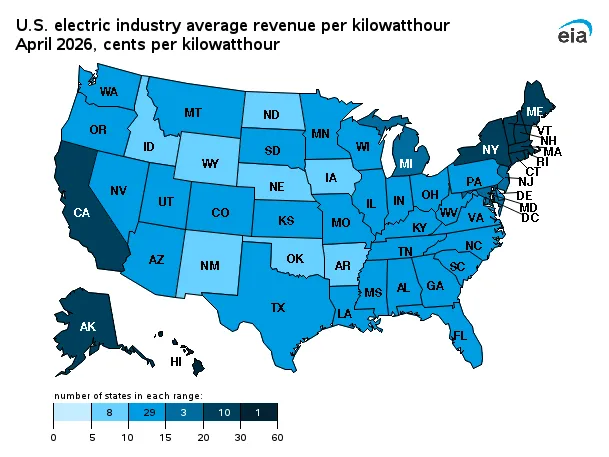
For a commercial property, electricity is one of the largest controllable expenses, and every increase pushes down net operating income, the money left after the bills are paid. Recent federal figures show average commercial electricity prices up 5.8% from a year earlier, with some states far higher: Maryland up more than 50%, Ohio up 21%, according to the Energy Information Administration. When power costs rise, a building earns less, and because a property's value is tied to the income it produces, a thinner operating statement can mean a lower sale price. The $4.3 billion is not a distant policy statistic. It is one of the forces behind the rising number at the bottom of the utility bill.
The Rules Are Changing Fast
States noticed, and they are moving. More than 300 data center bills have been filed across over 30 states this year, and at least 18 states are creating separate rate categories that require large power users to cover their own connection and upgrade costs, according to policy trackers. The goal is to stop the cost of serving data centers from landing on households and ordinary businesses. Where these rules take hold, they protect the electricity bill across an owner's whole portfolio. Where they lag, the exposure continues. That makes the outcome of these state fights a real financial variable for any property near a big proposed data center.
What an Owner Can Do
Two responses follow. The first is to watch the local rules, because whether a state shifts data center costs onto the users or onto everyone else will directly shape the delivered price of power in that market for years. The second is the more durable move: reduce exposure to the grid price altogether. A building that generates and stores a portion of its own power is partly insulated from whatever the rate fights ultimately decide. That is the recurring lesson of this series. When the cost of buying power from the grid is uncertain and rising, the surest hedge is to need less of it.
