What We Heard at APA 2026: Distributed Energy Is Now a Planning Issue
By Keith Reynolds | Publisher & Editor, ChargedUp!
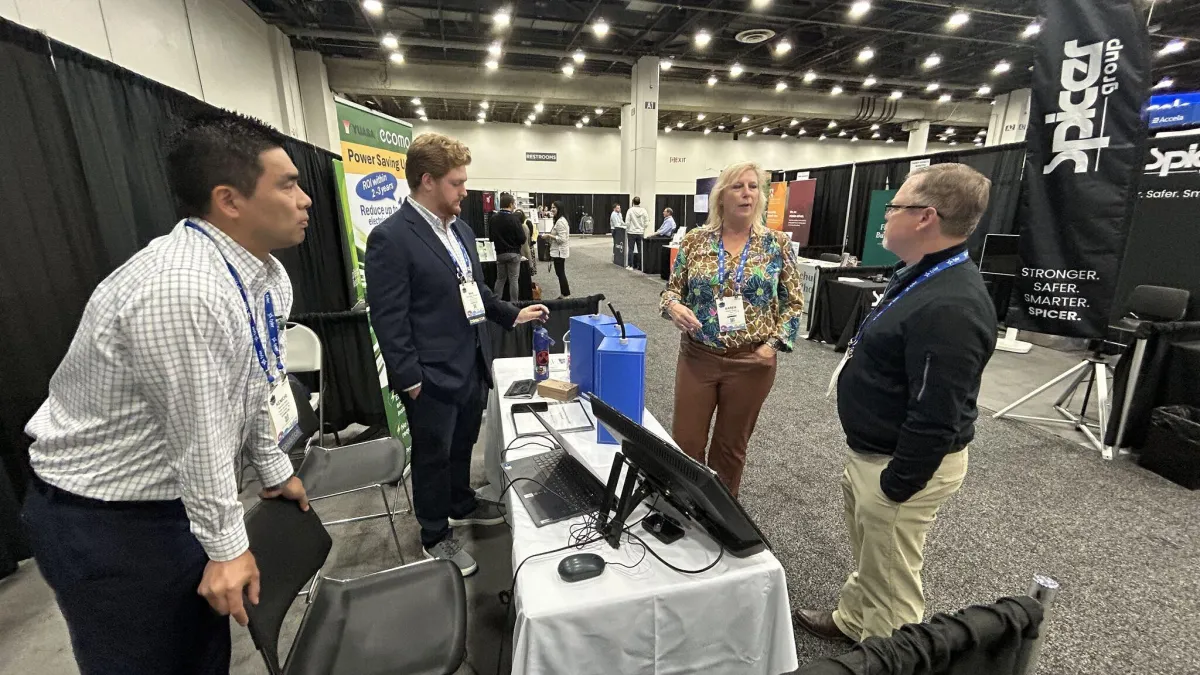
At this week's American Planning Association National Planning Conference in Detroit, the strongest response to our ChargedUp! presentation was not about a single technology, but rather a shift in responsibility.
Distributed energy is no longer just an energy technology category. It is now a land-use, mobility, resilience and economic-development question. That makes the planning profession central to whether the next generation of energy infrastructure can actually be built.
I went into the event with a clear hypothesis: urban planners matter because they control the local approval pathway. Federal policy can encourage onsite power, solar, batteries, microgrids, EV charging and virtual power plants. But states and localities still control zoning, land use, permitting, site design and many of the rules that determine whether projects move forward.
After the presentation and roundtable, that hypothesis feels stronger. The room understood the point quickly because planners already live in the space between vision and implementation. They know that growth does not happen in the abstract. It happens on parcels, in corridors, near substations, inside zoning districts, through public process and under codes written for a different infrastructure era.
Energy Moves From Utility Expense to Strategic Infrastructure
The central argument of the ChargedUp! white paper, The Energy-Equity Connection, is that energy has moved from a passive utility line item to a strategic variable in real estate, infrastructure and community development. For owners and developers, energy now touches net operating income, tenant experience, resilience, growth capacity and asset value. For communities, it touches competitiveness, infrastructure timing, local approval risk and the ability to attract private investment.
That framing resonated at APA because planners understand systems. A building is part of a street, a district, a transportation network, a utility network and a local economy.
Once power moves closer to where it is consumed, energy policy becomes place policy. And place policy is the planner's domain.
The Local Approval Pathway Is a Real Energy Constraint
Distributed energy does not scale on technology alone. It scales when projects can be approved, sited, financed, connected, operated and accepted by the communities around them.
A solar canopy has to comply with height limits and lot-coverage rules. A battery enclosure has to satisfy setback, safety, screening and noise requirements. EV charging infrastructure has to fit into parking design, traffic circulation, electrical-room capacity, ADA requirements and utility coordination. A microgrid has to be integrated into a real site with real inspections and real operating constraints.
That is why planners are both gatekeepers and enablers. In many communities, the barriers are not intentional. The code may simply have been written before rooftop solar, parking-lot canopies, battery storage, fleet charging, mixed-use microgrids or virtual power plants became practical development considerations.
The opportunity is to modernize those rules before development pressure forces rushed decisions. Communities that do this well will make it easier for good projects to move forward while still protecting public safety, urban design, neighborhood character and long-term goals.
Future-Readiness Is Cheapest at the Design Stage
One of the clearest planning lessons is also one of the simplest: future-readiness is far cheaper when it is designed in from the beginning.
Requiring larger electrical rooms, conduit capacity for future EV charging, structural readiness for rooftop solar or thoughtful locations for batteries and energy equipment may add modest cost during design. As a retrofit, the same changes can become expensive, disruptive or sometimes impossible.
That matters because electrical capacity is becoming a development constraint. Transformer queues, interconnection timelines and onsite service capacity increasingly determine what can be built within the next 24 months. A project may have demand, capital and tenants, but still be slowed by physical power delivery.
Planning decisions made today will determine whether buildings become stranded loads or flexible energy assets tomorrow.
Efficiency Is the First Layer of the Stack
Max DeCapri's presentation on Yuasa International's Ecomo product helped bring this discussion down to the operating level. Before an owner adds new load, the first question should be whether existing electrical waste can be reduced.
That is where efficiency becomes more than a sustainability measure. It becomes a capacity strategy.
As electricity costs rise and utility upgrades take longer, what happens behind the meter matters more. Every kilowatt freed through efficiency can create headroom for charging, electrification, HVAC, tenant growth or resilience without waiting for a major utility upgrade.
Ecomo was presented as a behind-the-meter efficiency device with a track record across commercial and industrial environments. Max shared examples of reduced electricity use in automotive and frozen-food production settings and framed the product around a simple operating outcome: lower energy expense, recovered capacity and improved cash flow.
For real estate owners, that flows directly into NOI. For planners, it creates a bridge between private investment and public benefit. A property that reduces waste, lowers demand pressure and creates room for new infrastructure can become easier to improve, easier to finance and more useful to the community around it.
That is the important connection. Efficiency is not separate from distributed energy. It is often the first layer of the stack.
Distributed Energy Is Becoming an Economic-Development Tool
The most important conversations at APA were not only about energy savings. They were about competitiveness.
Communities are competing for logistics, manufacturing, healthcare, housing, mixed-use development, research facilities, data centers, small businesses and high-quality jobs. Increasingly, those projects depend on electrical capacity, energy resilience and speed to power.
Site selection is changing. Labor, transportation, land cost, tax environment and incentives still matter. But power availability is moving up the list. A community that can help developers understand where distributed energy makes sense, how it will be permitted and how it aligns with local infrastructure goals has an advantage.
That does not mean every community should say yes to every project. It means communities need a planning framework that can distinguish between speculative infrastructure claims and projects that genuinely improve resilience, capacity, value and economic opportunity.
The planning framework that supports distributed energy is not a cost to the community. It is an economic-development asset.
What Planners Can Do Next
Planners do not need to become electrical engineers, but they do need a working vocabulary for distributed energy and a practical agenda for local readiness.
The first step is a zoning and code audit. Are local rules unintentionally blocking solar, batteries, EV charging, microgrids or efficiency upgrades? Are setback, height, noise, screening, parking and lot-coverage rules aligned with the infrastructure communities now need?
The second step is future-ready design. New construction should be evaluated not only for today's minimum load, but for tomorrow's likely energy demands. EV charging, rooftop solar, battery storage, controllable load and efficiency should be part of early site conversations, not late-stage engineering surprises.
The third step is utility and developer coordination through the comprehensive plan. Planners may not control interconnection queues, but they can give utilities, owners and developers a clearer signal about where growth, mobility, resilience and load are expected to converge.
The fourth step is to treat distributed energy as community infrastructure. A building that can reduce demand, generate power, store energy or participate in a virtual power plant is more than a ratepayer. It can become part of the community's resilience and economic-development platform.
The Bottom Line From Detroit
The reception at APA was encouraging because the audience understood the practical stakes. Planners, developers, investors and community leaders are looking for ways to connect infrastructure investment with economic growth.
That is exactly where distributed energy now sits.
It will not scale because the technology is interesting. It will scale when communities can approve it, owners can finance it, utilities can integrate it, tenants can benefit from it and planners can align it with the future they are trying to build.
The next energy transition will not happen only in power plants, substations or data centers. It will happen in buildings, parking lots, campuses, neighborhoods, corridors and downtowns.
It will happen in places - and places are planned.
Want to understand how energy decisions now affect community resilience, commercial real estate value and local economic development? Read The Energy-Equity Connection and subscribe to ChargedUp! for ongoing analysis.
